
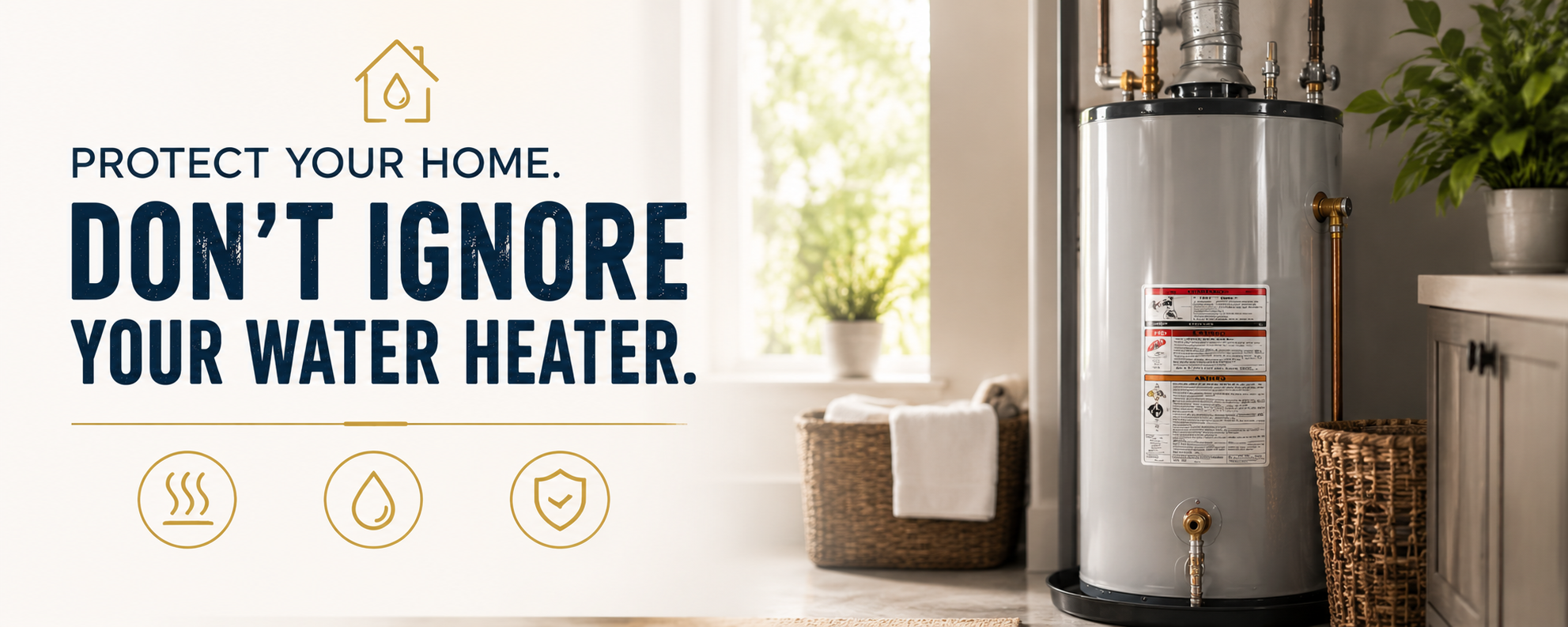
Most homeowners rarely think about their water heater until they turn on the shower one morning and discover there's no hot water.
Unfortunately, by the time a water heater completely stops working, it has often been showing warning signs for months—or even years.
Knowing what to look for can help you avoid unexpected breakdowns, reduce the chance of water damage, and even extend the life of one of your home's hardest-working appliances.
How Long Should a Water Heater Last?
A traditional tank-style water heater typically lasts 8 to 12 years, although many continue operating well beyond that with proper maintenance.
Tankless water heaters generally have longer lifespans, often 15 to 20 years or more, but they also benefit from routine servicing.
If your water heater is approaching the 10-year mark, it's worth paying a little closer attention to how it's performing.
Warning Signs You Shouldn't Ignore
You're Running Out of Hot Water Faster
If showers are getting shorter or hot water seems to disappear more quickly than it used to, sediment buildup inside the tank may be reducing its capacity.
While this doesn't always mean replacement is necessary, it's often an early sign that maintenance is overdue.
Strange Noises
Do you hear popping, rumbling, or banging coming from the tank?
Over time, minerals from your water settle to the bottom of the tank. As the burner heats the water, trapped steam bubbles force their way through the sediment, creating those unusual sounds.
The thicker the sediment layer becomes, the harder your water heater has to work.
Rust-Colored Water
If only your hot water has a rusty tint, the inside of the tank may be beginning to corrode.
In many cases, replacing the sacrificial anode rod can significantly slow internal corrosion and extend the life of the tank.
Water Around the Base
Even a small amount of water around your water heater deserves attention.
Sometimes it's simply condensation or a loose connection. Other times it may indicate the tank itself has begun to fail.
Catching a leak early can help prevent damage to flooring, drywall, and nearby belongings.
The Value of Flushing Your Water Heater
One of the most overlooked maintenance tasks is flushing sediment from the tank.
Over time, minerals naturally settle at the bottom, especially in areas with harder water.
Flushing the tank every year or two helps:
-
Improve heating efficiency
-
Reduce wear on the system
-
Restore hot water capacity
-
Minimize noise
-
Potentially extend the life of the unit
It's a relatively simple maintenance task for many homeowners, though some prefer to have it performed during an annual plumbing inspection.
Don't Forget the Anode Rod
Inside every tank-style water heater is a component called the anode rod.
Its job is to corrode instead of the steel tank itself.
Many homeowners have never heard of it, but replacing the anode rod before it's completely consumed can sometimes add several years to the life of a water heater.
It's a relatively inexpensive part that often pays for itself many times over.
When Is It Time to Replace?
You may want to begin planning for replacement if:
-
Your water heater is over 10–12 years old.
-
Repairs are becoming more frequent.
-
Rust is forming inside the tank.
-
Leaks are developing.
-
Hot water performance continues declining despite maintenance.
Replacing a water heater before it fails gives you time to compare options, schedule installation, and avoid the inconvenience of an emergency replacement.
A Little Maintenance Goes a Long Way
Like many parts of a home, water heaters quietly do their job every day without much attention.
A few minutes spent inspecting the unit once or twice a year—and keeping up with basic maintenance—can improve efficiency, reduce energy costs, and help you avoid one of the more common household emergencies.
Whether you're planning to stay in your home for decades or simply want to avoid unnecessary repair bills, preventative maintenance is almost always the most affordable option.