
Most homeowners look at a utility bill, check the amount due, and move on.
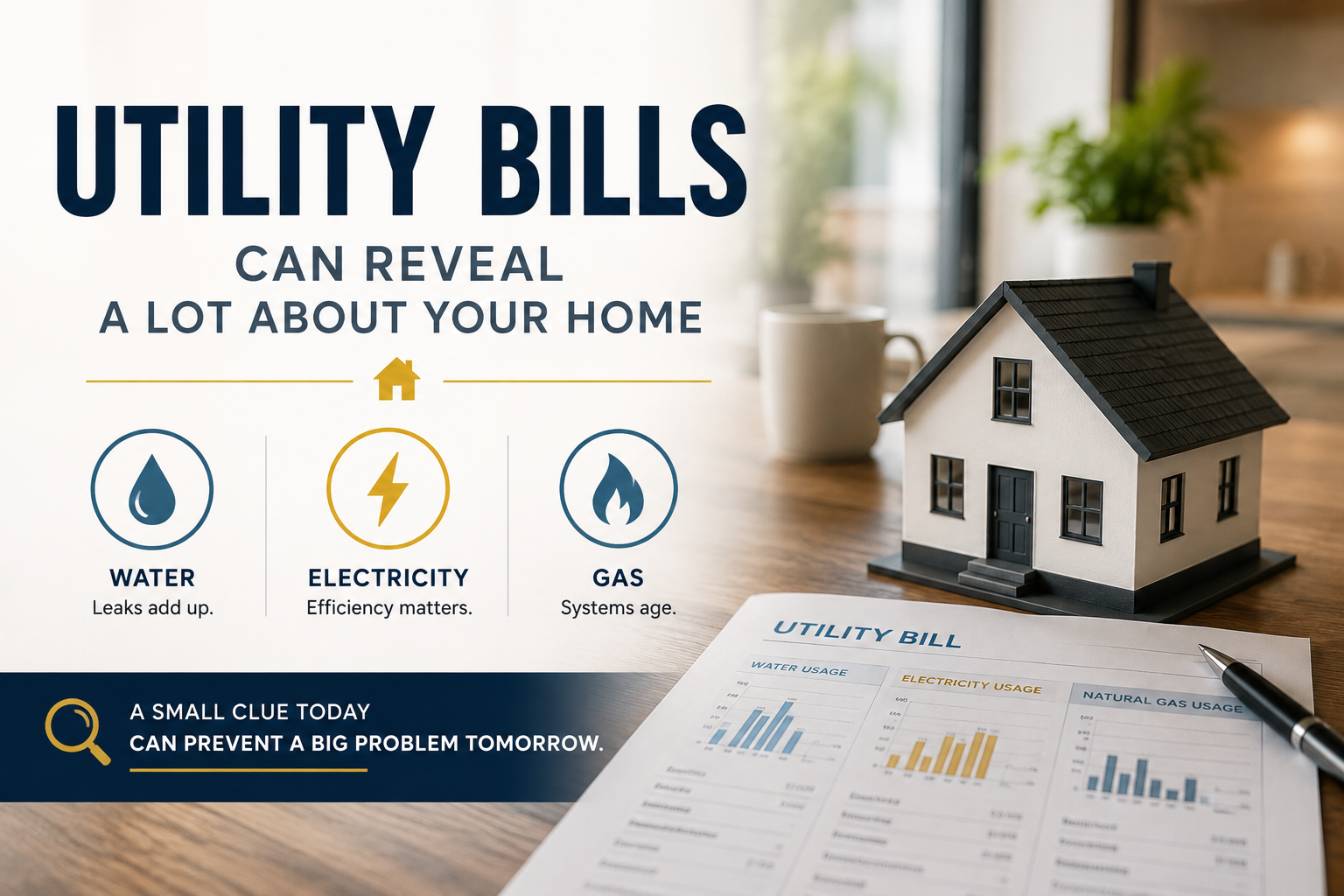
But those bills contain more information than many people realize. Changes in water, electricity, or natural gas consumption can provide early clues about leaks, inefficient equipment, failing appliances, and other problems developing inside the home.
A higher bill does not automatically mean something is wrong. Rates change, weather varies, and household routines are rarely identical from one month to the next.
However, when usage changes sharply without a clear explanation, your home may be trying to tell you something.
Look at Usage, Not Just Cost
The first step is to separate the amount you paid from the amount of energy or water you consumed.
A bill may increase because:
-
The utility changed its rates.
-
Taxes or service charges increased.
-
The billing period contained more days.
-
Temperatures were unusually hot or cold.
-
Your household used more water or energy.
Compare the usage section of the bill with the same month from the previous year. Many utility websites also provide charts showing monthly or daily consumption.
A gradual increase may reflect changing habits or an aging home system. A sudden spike deserves closer attention.
What a Higher Water Bill May Mean
An unexplained increase in water use is often one of the clearest warning signs.
Common causes include:
-
A toilet that continues running after flushing
-
A dripping faucet
-
A leaking irrigation line
-
A damaged outdoor hose bib
-
A malfunctioning water softener
-
A hidden supply-line leak
-
A water heater leaking slowly into a drain pan
A running toilet can be surprisingly quiet. Place a few drops of food coloring in the tank and wait without flushing. If colored water appears in the bowl, the flapper or another internal component may be leaking.
You can also turn off every faucet, appliance, and irrigation system that uses water. Check the water meter, wait 30 to 60 minutes without using water, and check it again. Movement may indicate a leak.
Small plumbing leaks are often inexpensive to fix when caught early. Left undetected, they can waste water and potentially damage flooring, cabinets, walls, or framing.
What an Electricity Spike May Reveal
Electricity use naturally rises during periods of heavy heating or cooling. However, unusual increases may signal that equipment is losing efficiency.
Possible causes include:
-
A dirty HVAC filter restricting airflow
-
A heat pump relying heavily on auxiliary heat
-
An older refrigerator or freezer running constantly
-
A failing water heater element
-
Portable heaters being used more frequently
-
An irrigation or well pump cycling excessively
-
Damaged weatherstripping around doors and windows
-
A dehumidifier, ventilation fan, or other appliance running continuously
Listen for equipment that seems to turn on more frequently or stay on longer than it used to.
Refrigerators and freezers are especially easy to overlook because they operate quietly in the background. Dirty coils, deteriorated door seals, or failing components may cause the compressor to run almost constantly.
Some utility providers offer hourly or daily usage information online. That data can help identify when the increase occurs and narrow down which appliance or system may be responsible.
What Natural Gas Usage Can Indicate
Natural gas consumption commonly rises during colder months, but unexpectedly high use can still reveal a problem.
Potential explanations include:
-
A furnace that needs servicing
-
A thermostat schedule that changed
-
Ductwork leaking into an attic or crawl space
-
A gas water heater losing efficiency
-
Poor insulation or air sealing
-
A fireplace or secondary heating appliance being used more often
Compare outdoor temperatures with the same period last year. If the weather was similar but gas use increased significantly, the heating system or building envelope may deserve attention.
Any suspected gas leak should be treated differently from normal efficiency concerns. A sulfur-like or rotten-egg odor, hissing sound, or physical symptoms such as dizziness should be taken seriously. Leave the area and contact the gas utility or emergency services from a safe location.
Your Home’s “Baseload” Matters
Baseload is the amount of water or energy a home uses even when heating, cooling, and major seasonal activities are minimal.
Electricity baseload may include:
-
Refrigerators and freezers
-
Internet equipment
-
Lighting
-
Electronics on standby
-
Pumps and ventilation equipment
-
Water heating
Water baseload may include:
-
Toilets
-
Faucets
-
Appliances
-
Small undetected leaks
If your baseload gradually rises over time, something may be running longer, leaking, or becoming less efficient.
Looking at the lowest-use months of the year can make this easier to spot.
Seasonal Changes Are Not Always Problems
Not every increase signals a repair.
August usage may rise because of:
-
Air conditioning or fans
-
Irrigation
-
Guests or children being home more often
-
Additional laundry
-
Outdoor projects
-
Electric-vehicle charging
-
Pool or hot-tub equipment
The goal is not to treat every change as an emergency. It is to understand whether the increase matches something that actually changed in your household.
A Simple Monthly Review
You do not need to perform a detailed energy audit every month.
A useful routine takes only a few minutes:
-
Compare the total cost with the previous bill.
-
Compare actual usage with the same month last year.
-
Check whether the billing period was longer.
-
Consider unusual weather or household changes.
-
Investigate unexplained increases.
-
Make a note of any repair, new appliance, or schedule change.
-
Keeping a simple record can reveal patterns that are easy to miss when each bill is viewed in isolation.
When to Call a Professional
Professional help may be worthwhile when:
-
Water usage remains elevated after checking visible fixtures.
-
Your heating or cooling system runs almost continuously.
-
Rooms have become harder to keep comfortable.
-
An appliance sounds different or feels unusually hot.
-
You notice moisture, staining, or musty odors.
-
Energy consumption rises without an identifiable reason.
A plumber, HVAC technician, electrician, appliance repair professional, or energy auditor can often identify problems before they turn into larger repairs.
A Monthly Bill Can Be an Early Warning
Utility bills are not just expenses. They are records of how your home is operating.
A sudden increase may be harmless, but it may also be the first visible sign of a leak, failing component, or efficiency problem.
Homeowners who recognize changes early often have more time to investigate, compare repair options, and address the issue before it causes damage or becomes an emergency.
A few minutes spent reviewing your household usage can provide valuable insight into the condition of your home—and may help protect both its comfort and long-term value.