
Most costly home repairs do not start out looking costly.
They often begin as a small stain, a slow drip, a strange smell, or something that just does not seem quite right. The problem is that homeowners get used to seeing these little things and put them off for another day.
In the Pacific Northwest, where moisture is a constant part of homeownership, waiting can sometimes turn a minor repair into a much larger project.
Here are seven small warning signs worth paying attention to.
1. A Small Water Stain on the Ceiling
A faint brown ring or small discoloration may not seem urgent, especially if it is dry.
But water stains can point to a roof leak, plumbing issue, failing flashing, or condensation problem.
The visible stain is often only the end result. Water may be traveling along framing or drywall before it appears inside the home.
Why it matters: Even a small leak can eventually lead to damaged drywall, insulation, framing, or mold.
If the stain changes after heavy rain, that is especially worth investigating.
2. Water Collecting Near the Foundation
After a Northwest rainstorm, take a quick walk around your home.
Do you see standing water near the foundation? Are your downspouts dumping water right next to the house?
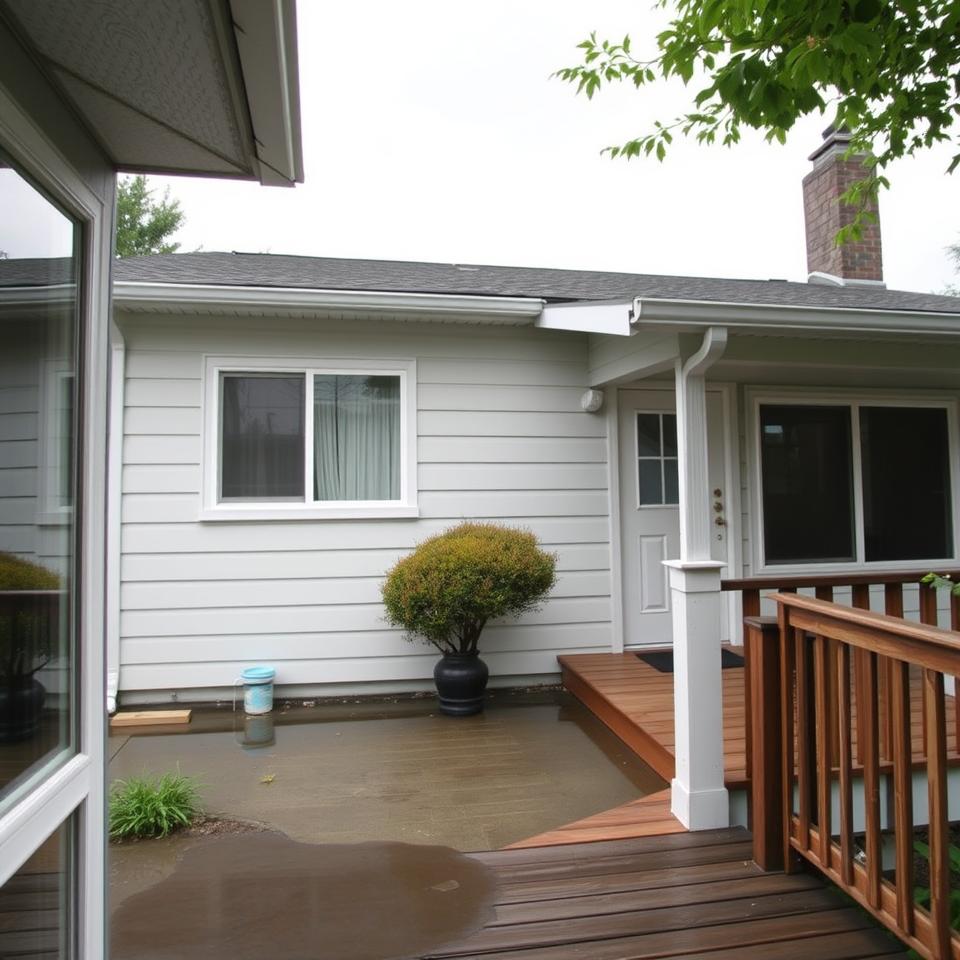
That may seem harmless, but water consistently pooling near the foundation can eventually find its way into crawlspaces, basements, or other areas where you really do not want it.
What to watch for: clogged gutters, short downspouts, soil sloping toward the house, or drains that are no longer moving water properly.
Sometimes a very simple drainage correction can prevent a much more expensive moisture problem.
3. A Musty Smell in the Crawlspace, Basement, or Garage
Your nose can sometimes spot a home problem before your eyes do.
A persistent musty or damp smell may indicate excess moisture, poor ventilation, a plumbing leak, or water intrusion.
This is especially important around crawlspaces, where problems can stay hidden for a long time.
Do not just cover the smell. Try to find out where the moisture is coming from.
4. Peeling or Bubbling Exterior Paint
Paint is not just cosmetic.
On wood siding and trim, it also helps protect the material underneath from moisture.
Peeling, cracking, or bubbling paint may mean water is getting behind the surface or that exposed wood is beginning to deteriorate.
In our climate, a small area of failed paint can eventually become rotten trim or siding.
Catching it early can mean scraping, caulking, and repainting instead of replacing wood.
5. A Toilet That Keeps Running
A toilet that occasionally runs by itself can become background noise pretty quickly.
Usually, the repair is simple.
But ignoring it can mean wasting a surprising amount of water over time, and in some cases a toilet problem can eventually lead to leaks around the tank, supply line, or base.
The same rule applies to dripping faucets.
If water is moving when it should not be, it is worth finding out why.
6. A Loose Deck Board or Railing
A slightly soft deck board or wobbly railing may seem like something you can deal with next summer.
But outdoor wood takes a beating here.
Moisture can cause rot around fasteners, stairs, posts, railings, and areas where the deck connects to the house.
If one board feels unusually soft, look beyond that board.
The visible problem may be the first sign that water has affected a larger area.
7. Flickering Lights or Frequently Tripped Breakers
One flickering bulb may simply mean the bulb is loose.
Repeated flickering, warm outlets, buzzing switches, or breakers that regularly trip deserve more attention.
Electrical issues are not something I recommend homeowners troubleshoot beyond simple basics.
If something does not seem right, having a qualified electrician look at it is usually the safer choice.
The Best Time to Look Is Before Something Fails
You do not need to become a home inspector.
The goal is simply to notice changes.
Once every few months, walk around your home and ask:
What looks different? What smells different? What sounds different?
Those three questions can catch a surprising number of problems early.
And early is usually when a repair is easiest.
Need a Home-Service Recommendation?
Over the years I have built relationships with a lot of local contractors and home-service professionals.
If you need a recommendation for a plumber, electrician, handyman, roofer, landscaper, inspector, or another home-related service, just reply to this email and tell me what you need.
If I know someone I trust, I am always happy to make an introduction.