
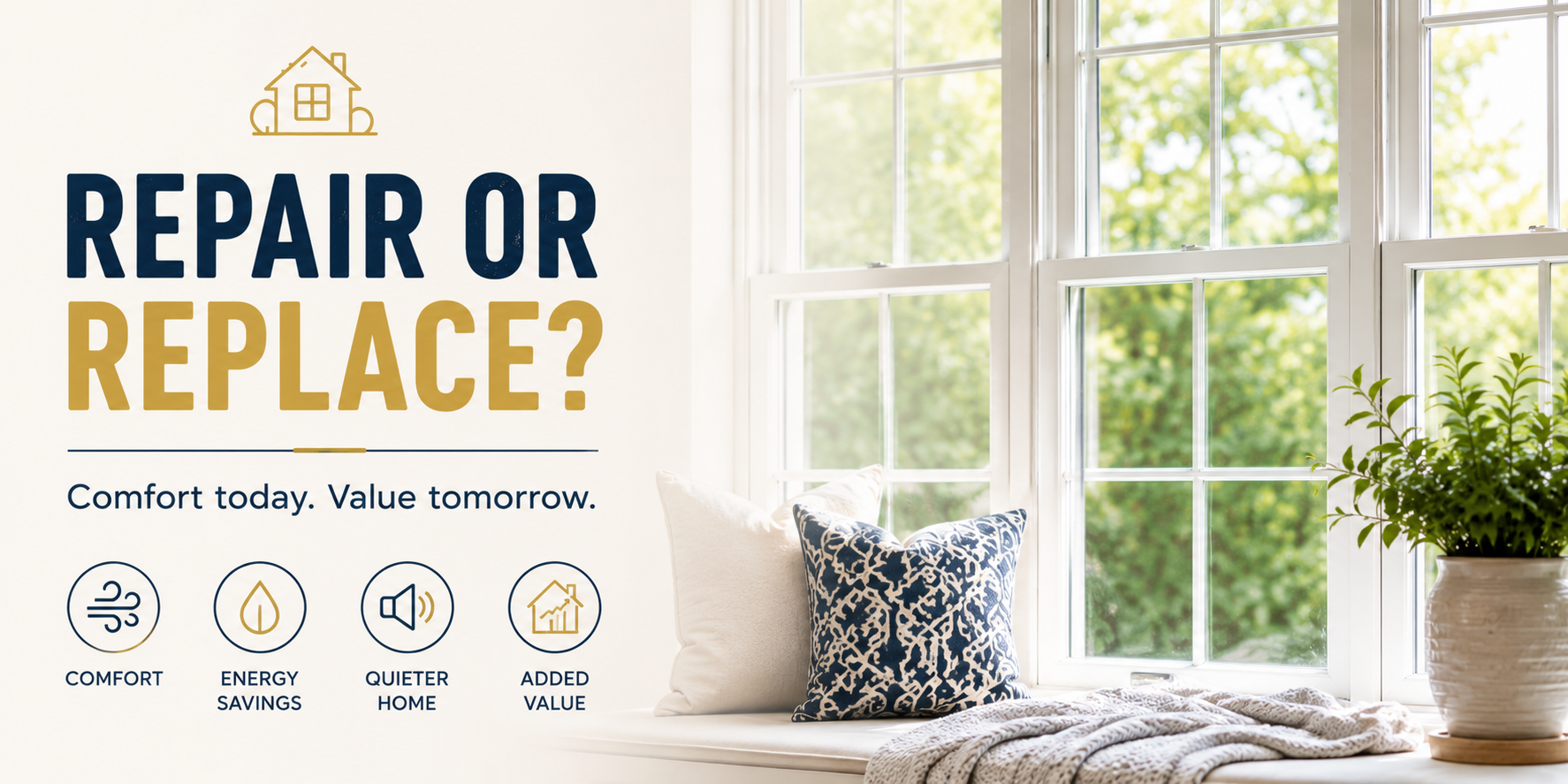
Windows quietly influence almost every aspect of your home.
They affect comfort, energy efficiency, natural light, curb appeal, outside noise, and even how buyers perceive a property.
But replacement windows are a significant investment, leaving many homeowners wondering:
Are my windows actually worn out—or do they simply need some attention?
The answer depends on what you're seeing.
When a Repair May Be All You Need
Not every aging window needs to be replaced.
Many common issues can often be corrected with relatively inexpensive repairs.
Consider repairing your windows if:
-
The window is difficult to open or close.
-
Locks or hardware no longer operate smoothly.
-
Caulking around the frame has deteriorated.
-
Weatherstripping has worn out.
-
Minor air leaks are present.
-
Paint or finish simply needs refreshing.
These repairs can noticeably improve comfort without the expense of full replacement.
Signs Replacement Makes More Sense
Sometimes repairs simply delay the inevitable.
Replacement becomes a stronger option when you notice:
Condensation Between Glass Panes
If moisture appears inside a double-pane window, the insulated seal has likely failed.
Once this happens, the window loses much of its insulating ability.
Rotting Frames
Wood windows can last decades when maintained, but prolonged moisture exposure eventually causes rot.
Structural deterioration usually points toward replacement.
Persistent Drafts
If you've already replaced weatherstripping and caulking but cold air still enters around the window, the frame itself may have warped over time.
Single-Pane Windows
Many older homes still have original single-pane windows.
While charming, they generally provide much less insulation than today's modern double- or triple-pane units.
Will New Windows Save Money?
Replacement windows almost always improve energy efficiency.
However, many homeowners overestimate the financial return.
In our Pacific Northwest climate, replacing windows is often more about:
-
Improved comfort
-
Fewer drafts
-
Reduced outside noise
-
Easier operation
-
Lower maintenance
-
Updated appearance
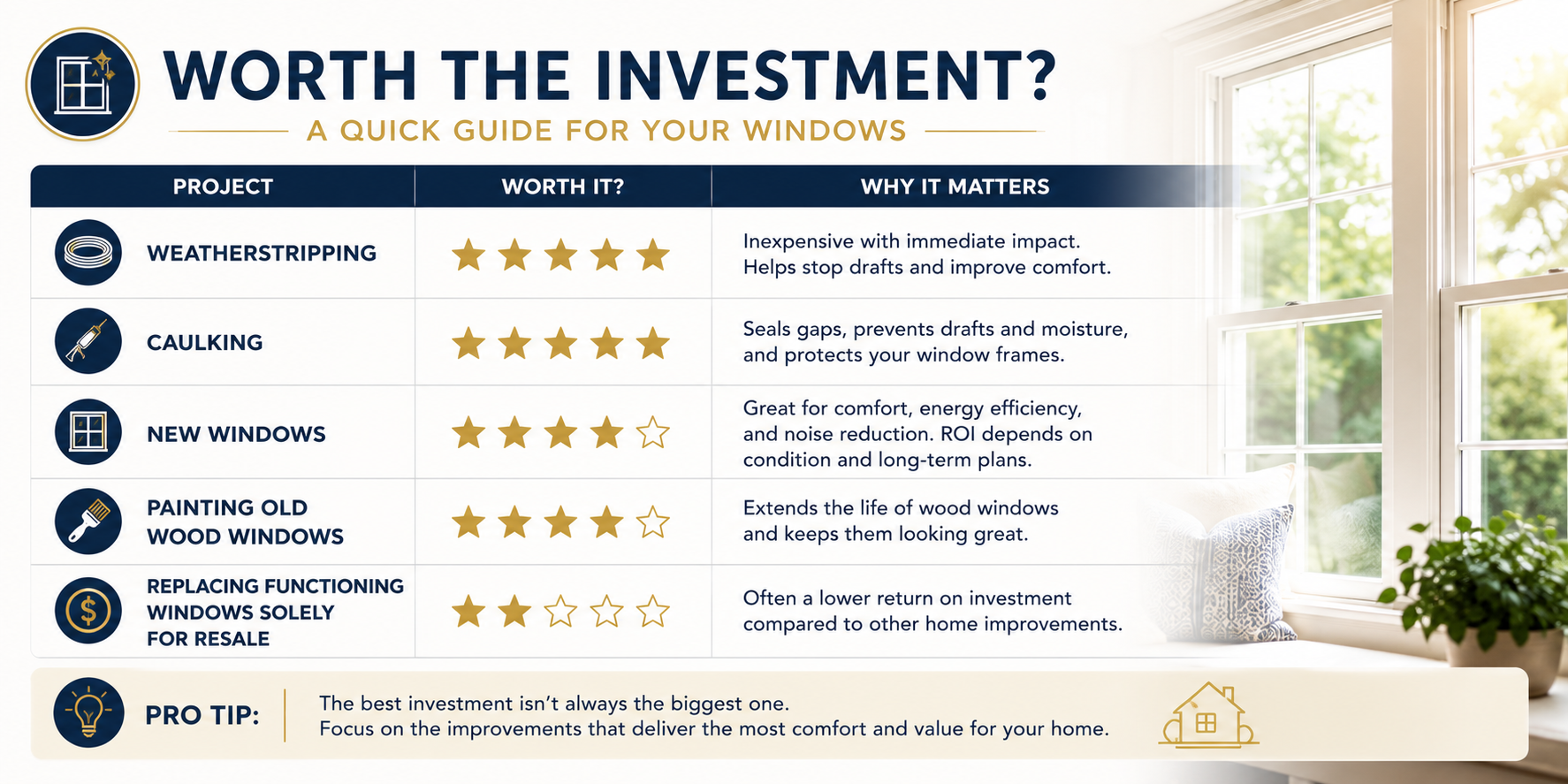
The utility savings are certainly real, but they're usually gradual rather than dramatic.
What About Resale Value?
Many homeowners assume new windows automatically return their full cost when selling.
In reality, that's rarely the case.
Buyers absolutely appreciate newer windows because they signal a well-maintained home.
However, replacement windows typically contribute to overall marketability rather than adding their full installation cost directly to the home's value.
If your existing windows are in poor condition, replacement can absolutely help a home compete.
If they're simply older but functioning well, the money may be better invested elsewhere depending on your goals.
Questions to Ask Before Replacing
Before making a decision, consider:
-
How old are the windows?
-
Are they functioning properly?
-
Are you planning to stay five years or twenty?
-
Are comfort and energy savings important?
-
Are you preparing to sell soon?
-
Would another improvement provide a better return?
Every home is different.
The Bottom Line
Replacement windows can be one of the most satisfying home improvements you'll make—but they're not always the first project that deserves your budget.
If your windows are structurally sound, repairing weatherstripping, replacing caulking, or servicing hardware may restore much of their performance for a fraction of the cost.
On the other hand, if you're dealing with failed seals, rotting frames, persistent drafts, or original single-pane windows, replacement can improve comfort, reduce maintenance, and make your home feel newer every day.
The best investment isn't always replacing everything—it's making the improvement that delivers the greatest benefit for your home and your long-term plans.