
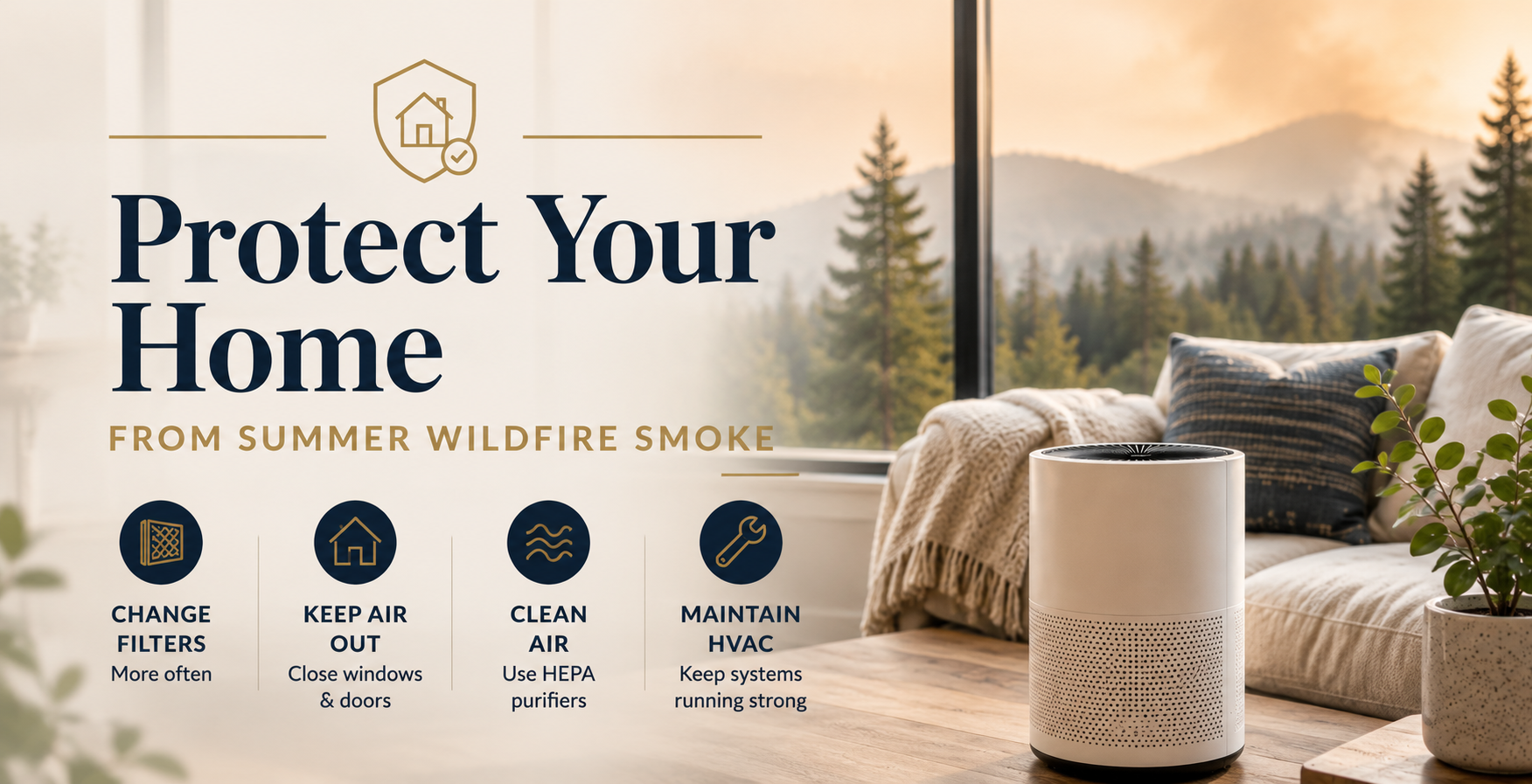
Simple Steps to Improve Air Quality and Protect Your Home
Summer in the Pacific Northwest often brings beautiful weather—but in recent years, it has also brought wildfire smoke. Even when fires are hundreds of miles away, smoke can quickly impact local air quality and find its way inside your home.
Fortunately, protecting your home doesn't require expensive upgrades. A few simple maintenance habits can help improve indoor air quality, reduce strain on your HVAC system, and preserve one of your home's most important investments.
Change HVAC Filters More Often
During wildfire season, your HVAC filter works much harder than usual.
Smoke contains extremely fine particles that quickly clog standard filters, reducing airflow and forcing your heating and cooling system to work harder.
Check your filter monthly during wildfire season and replace it whenever it appears dirty rather than waiting for your normal schedule.
If your HVAC system allows it, consider upgrading to a higher-efficiency filter that is compatible with your equipment. Always follow your manufacturer's recommendations, as filters with very high MERV ratings can restrict airflow in systems not designed for them.
Keep Outdoor Air Outside
When outdoor air quality is poor, keep windows and exterior doors closed as much as possible.
Weather stripping around doors and windows not only improves energy efficiency but also helps reduce smoke infiltration.
If your home has an attached garage, avoid leaving the garage door open longer than necessary, since smoke can easily enter the living space.
Use Air Purifiers Where They Matter Most
Portable HEPA air purifiers are one of the most effective ways to improve indoor air quality during heavy smoke events.
Focus on rooms where your family spends the most time, such as:
-
Bedrooms
-
Living rooms
-
Home offices
A properly sized HEPA purifier can significantly reduce airborne smoke particles indoors.
Don't Forget HVAC Maintenance
Smoke season places additional stress on your heating and cooling system.
An annual HVAC inspection helps ensure:
-
Clean evaporator coils
-
Proper airflow
-
Efficient operation
-
Longer equipment life
Routine maintenance often costs far less than premature repairs or replacement.
Protect More Than Just Your Air
Wildfire smoke doesn't only affect your HVAC system.
It can also leave residue on:
-
Outdoor furniture
-
Patio cushions
-
Exterior windows
-
Deck surfaces
-
Outdoor grills
Cleaning these surfaces after smoke events helps prevent staining and extends their lifespan.
Think Long-Term
Homeownership is often about small, consistent maintenance rather than major repairs.
Replacing filters, servicing your HVAC system, and improving indoor air quality may seem like minor tasks, but together they help protect your home's comfort, efficiency, and long-term value.
Taking a proactive approach today can reduce future repair costs while making your home a healthier place to live during wildfire season.