
When people hear "the housing market," it's easy to imagine one market moving in one direction.
The reality is much more nuanced.
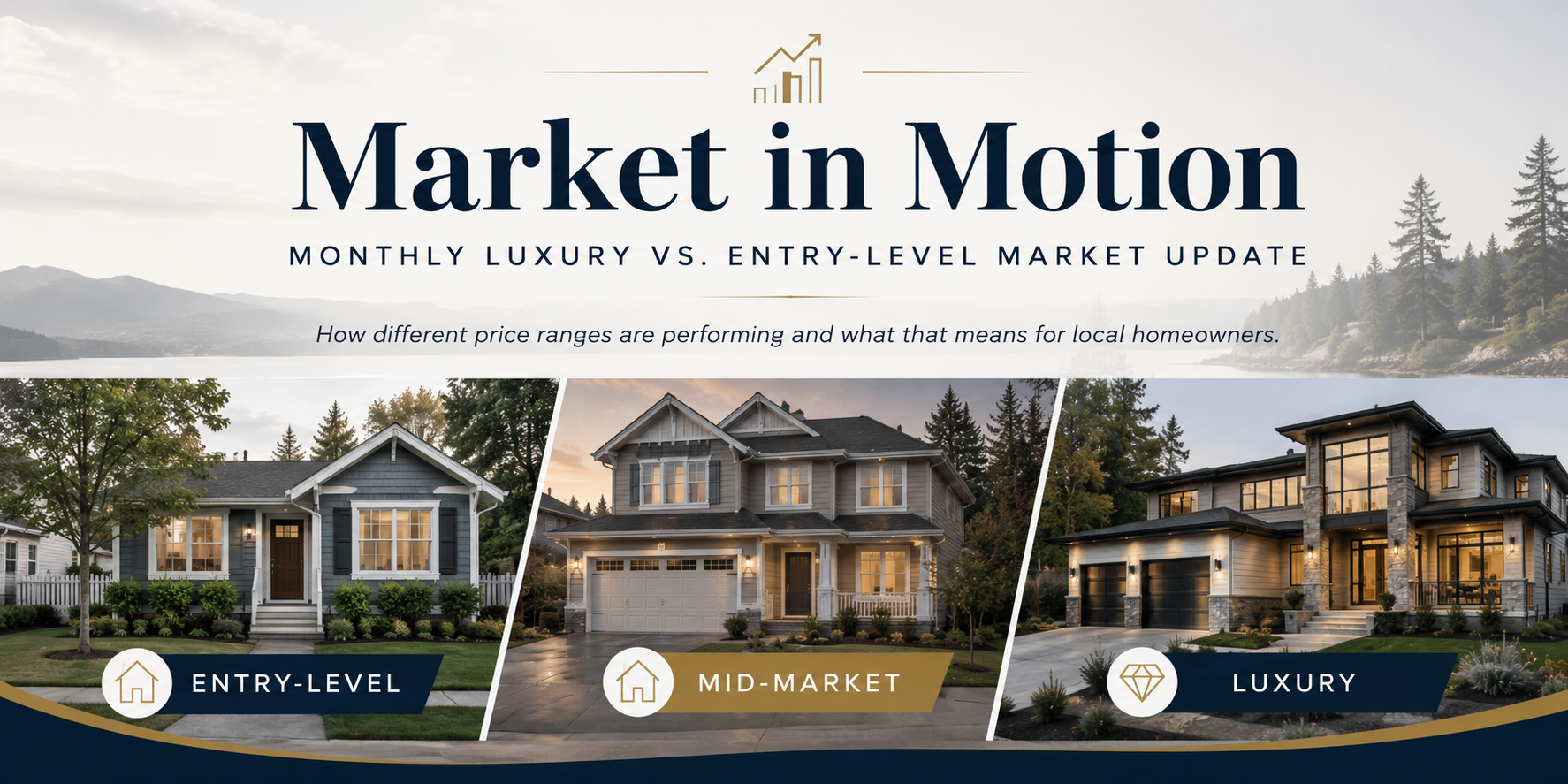
Today's real estate market is really several markets operating at the same time. Entry-level homes, mid-priced properties, and luxury homes each experience different levels of buyer demand, competition, and inventory.
Understanding where your home fits can provide a much clearer picture than broad national headlines.
Entry-Level Homes
Homes at the lower end of the local market continue to benefit from one important factor: limited inventory.
Many buyers are competing for a relatively small number of available homes, especially those that are well maintained and appropriately priced.
As a result, attractive entry-level properties often receive strong interest shortly after they come to market.
For sellers, preparation still matters, but demand remains healthy in this segment.
Mid-Market Homes
The middle of the market continues to be active, although buyers have become increasingly selective.
Today's buyers compare more homes online before scheduling tours, making presentation more important than ever.
Homes that are clean, well maintained, professionally photographed, and priced appropriately continue to perform well.
Those that are overpriced or require significant deferred maintenance may spend more time on the market.
Luxury Homes
Luxury real estate follows its own rhythm.
Buyers in this segment generally have more options and often take additional time to evaluate each property carefully.
Exceptional marketing, staging, photography, video, pricing strategy, and overall presentation become increasingly important.
Luxury homes absolutely continue to sell—but success often depends on creating an experience rather than simply listing a property.
Why This Matters
Many homeowners compare their home's value to headlines they see online.
Unfortunately, those headlines often describe broad national trends that may have very little to do with a particular neighborhood or price range.
Two homes located only a few miles apart can experience very different market conditions simply because they appeal to different buyers.
Understanding your specific segment provides much more useful information than relying on average statistics.
Every Home Has Its Own Market
One of the most important conversations I have with homeowners is explaining that pricing strategy should always reflect the home's actual competition.
A $700,000 home shouldn't be priced like a $1.3 million home.
A luxury property shouldn't be marketed the same way as an entry-level home.
Every price range attracts different buyers with different expectations.
Recognizing those differences helps sellers position their home for success.
The Bottom Line
Whether your home falls into the entry-level, mid-market, or luxury segment, buyers are still purchasing homes throughout our region.
The key is understanding how your particular market is performing and tailoring the strategy accordingly.
No matter what the headlines say, the most important market is the one your home actually competes in.
If you're curious where your property fits in today's market, I'd be happy to provide a personalized market analysis and explain what's happening within your neighborhood and price range.