
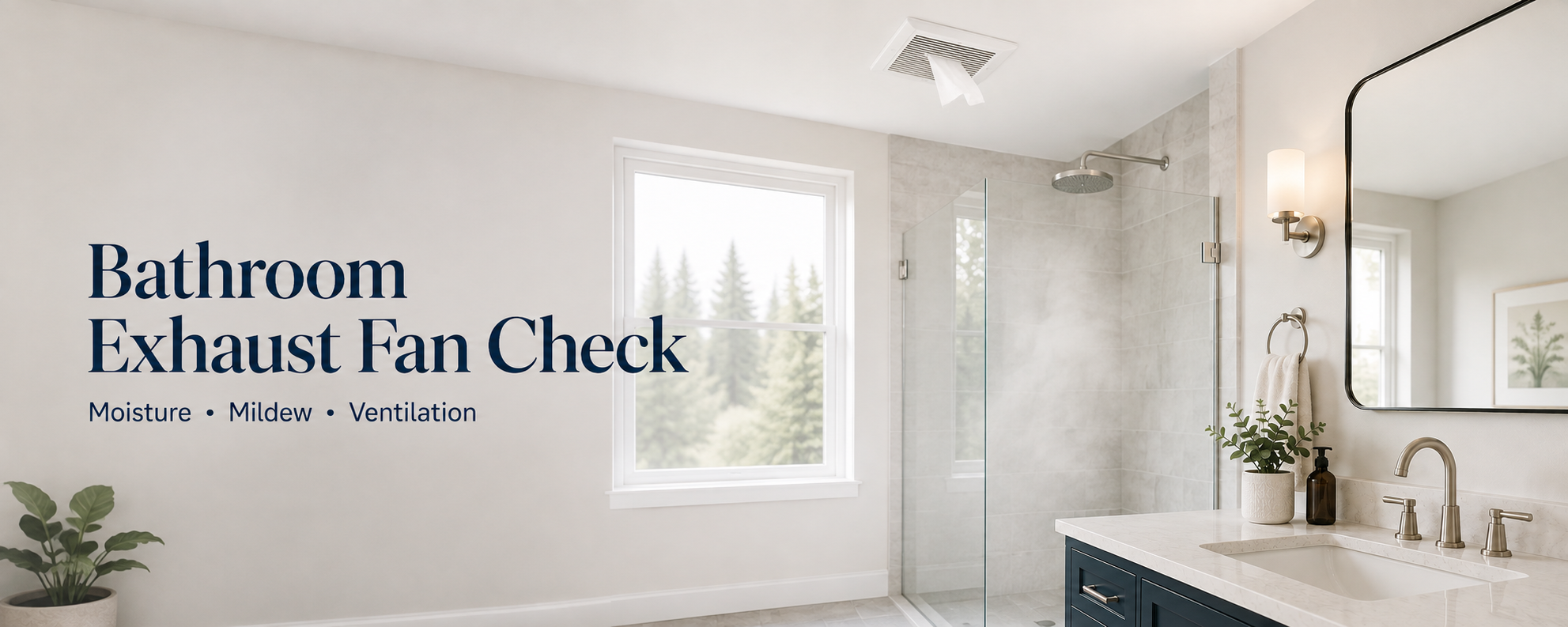
Bathroom exhaust fans are easy to ignore.
They sit quietly in the ceiling, switch on with a light or wall control, and usually get very little attention until they become noisy—or stop working altogether.
But a bathroom fan does more than remove odors.
Its most important job is controlling moisture.
Every hot shower releases a large amount of water vapor into the air. If that moisture is not removed effectively, it can settle on ceilings, walls, grout, window frames, cabinetry, and other surfaces.
Over time, that can contribute to mildew, peeling paint, damaged finishes, and more serious moisture problems.
Why Bathroom Ventilation Matters
Warm, humid air does not simply disappear when the shower ends.
It moves through the room and condenses on cooler surfaces.
You may notice:
-
Fogged mirrors
-
Damp walls
-
Water collecting on windows
-
Mildew on ceilings
-
Darkened grout
-
Peeling paint
-
Musty odors
These are all signs that moisture may be lingering longer than it should.
A properly working exhaust fan helps move that humid air out of the bathroom before it has time to cause damage.
A Simple Test: Is Your Fan Actually Moving Air?
You do not need special equipment to perform a basic airflow check.
Turn on the exhaust fan and hold a square of toilet paper or lightweight tissue against the grille.
If the fan is working reasonably well, the paper should be pulled toward the grille and stay there.
If it immediately falls away, airflow may be weak.
This is not a professional measurement, but it is a useful first check.
Weak airflow can be caused by:
-
Dust buildup
-
A clogged grille
-
A failing fan motor
-
A long or poorly designed duct run
-
A blocked exterior vent
-
An undersized fan
-
Ductwork that has become disconnected
-
Clean the Grille First
One of the easiest fixes is also one of the most commonly overlooked.
Bathroom fans collect dust.
Over time, that dust can cover the grille and accumulate inside the housing, restricting airflow and making the motor work harder.
A basic cleaning usually involves:
-
Turning off the fan.
-
Removing the grille.
-
Washing or vacuuming the grille.
-
Carefully removing dust from inside the housing.
-
Reinstalling everything once dry.
Always follow the manufacturer's instructions and turn off power at the breaker if you are working near electrical components.
In many cases, simply removing years of dust noticeably improves airflow and noise.
Your Fan Should Vent Outside
This is an important distinction.
Bathroom exhaust fans should move humid air outside the home, not simply into an attic or other enclosed space.
A fan that dumps moisture into an attic may solve one problem while creating another.
Moisture released into attic spaces can contribute to condensation, mold growth, or deterioration of wood components.
If you are unsure where your fan terminates, this is worth checking—especially in older homes or after remodeling work.
How Long Should the Fan Run?
Turning the fan off the moment you step out of the shower may not give it enough time to remove the remaining humidity.
A useful routine is to run the fan while showering and continue running it afterward until the room has largely cleared.
Many homeowners install timer switches so the fan automatically continues running without being forgotten.
Humidity-sensing switches are another option. These can activate the fan when moisture levels rise and shut it off after conditions return closer to normal.
Signs Ventilation May Be Inadequate
Even if the fan runs, it may not be moving enough air.
Watch for:
Persistent Fogging
If mirrors and windows remain fogged for a long time after a shower, humidity may be clearing too slowly.
Recurring Mildew
Mildew that quickly returns after cleaning can indicate that surfaces are staying damp.
Peeling or Bubbling Paint
Moisture can work its way behind paint and cause bubbling, flaking, or discoloration.
Musty Odors
A persistent musty smell may indicate that moisture is lingering in porous materials or hidden areas.
Excessive Fan Noise
A fan that becomes louder over time may be clogged, worn, or nearing replacement.
Does the Fan Need to Be Replaced?
Not always.
A fan that is simply dirty may perform much better after cleaning.
Replacement may make more sense if:
-
The motor is failing.
-
Airflow remains poor after cleaning.
-
The fan is extremely noisy.
-
The unit is very old.
-
The bathroom was remodeled and now needs greater ventilation.
-
The existing fan was undersized for the room.
Modern fans can be significantly quieter than older units, and many include built-in timers, lights, heaters, or humidity sensors.
Why Moisture Control Matters in the Pacific Northwest
Here in the Pacific Northwest, homes already spend much of the year dealing with damp outdoor conditions.
Adding unnecessary interior moisture can make ventilation and moisture management even more important.
Bathrooms are one of the most concentrated sources of indoor humidity.
Keeping that moisture under control can help protect:
-
Drywall
-
Paint
-
Wood trim
-
Window frames
-
Cabinets
-
Grout
-
Caulking
-
Attic spaces
Small preventive steps can reduce the chance of much larger repairs later.
A Five-Minute Homeowner Check
Every few months, take a quick look at your bathroom fan.
Ask yourself:
-
Is the grille covered in dust?
-
Does the fan sound different than it used to?
-
Does toilet paper stay against the grille?
-
Does humidity clear reasonably quickly?
-
Is mildew repeatedly appearing?
-
Is the exterior vent clear?
You do not need to wait for visible damage before checking the system.
The Bottom Line
Your bathroom exhaust fan is a small piece of equipment with an important job.
It helps protect your home by removing moisture before that humidity has time to settle into finishes, walls, ceilings, and other vulnerable areas.
If the fan is dirty, weak, noisy, or ineffective, a little maintenance may restore its performance.
And if it is no longer doing the job, replacement is usually far less expensive than repairing moisture damage later.
Like many parts of a home, the best time to pay attention is before there is an obvious problem.