
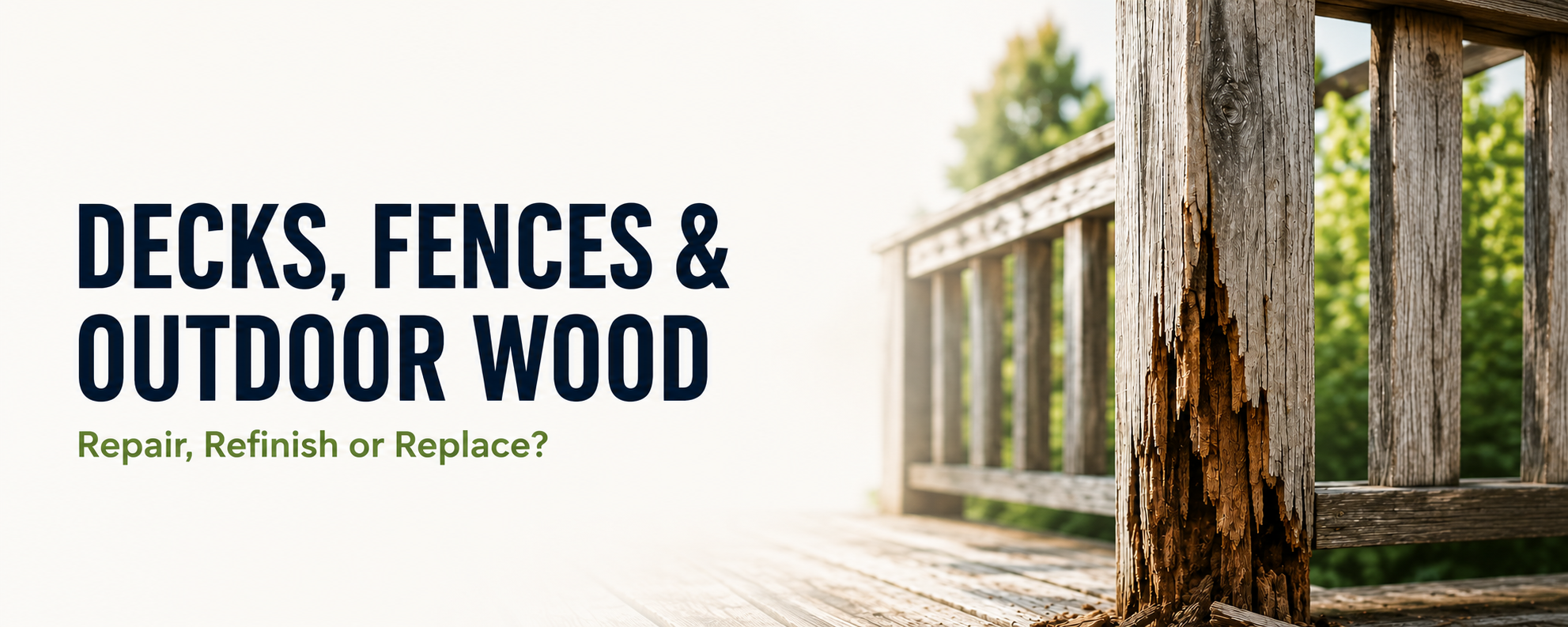
Outdoor wood ages visibly.
Deck boards fade.
Fences turn gray.
Stain wears away.
Small cracks appear.
That can make homeowners wonder whether the entire structure is nearing the end of its life.
Sometimes it is.
But often, the wood simply looks older than it really is.
The important distinction is between cosmetic aging and structural deterioration.
Knowing the difference can help you avoid unnecessary replacement while still addressing problems that may affect safety, longevity, or resale value.
Weathered Does Not Always Mean Worn Out
Wood exposed to the Pacific Northwest climate takes a beating.
Sunlight dries it.
Rain adds moisture.
Shade encourages moss and mildew.
Temperature changes cause expansion and contraction.
Over time, even structurally sound wood can develop a weathered appearance.
Common cosmetic signs include:
-
Gray or faded boards
-
Peeling or worn stain
-
Minor surface checking
-
Rough texture
-
Light mildew
-
Small splinters
-
Uneven coloring
These issues may be unattractive, but they do not automatically mean the deck or fence needs replacement.
When Refinishing May Be Enough
If the wood is still firm and structurally sound, refinishing can often restore both appearance and protection.
A typical maintenance process may include:
-
Cleaning the surface
-
Removing moss, mildew, and debris
-
Allowing the wood to dry
-
Sanding rough areas
-
Replacing a few damaged boards if necessary
-
Applying stain, sealer, or protective finish
The goal is not only appearance.
A good finish helps reduce water absorption and slows the cycle of moisture damage.
The Screwdriver Test
One simple homeowner check can reveal a lot.
Use a screwdriver to gently probe areas that appear suspicious, especially:
-
Around post bases
-
Near stair stringers
-
Along board ends
-
Where wood contacts soil
-
Beneath planters
-
Around ledger boards
-
Near areas that remain shaded or damp
Healthy wood should feel firm.
If the screwdriver easily sinks into the material or the wood feels soft, crumbly, or spongy, rot may be present.
That is no longer just a cosmetic issue.
Look Closely at Posts and Supports
The visible deck boards receive most of the attention, but the structural components underneath matter more.
Inspect:
-
Support posts
-
Beams
-
Joists
-
Stair framing
-
Rail connections
-
Footings
-
Ledger attachments
A few weathered surface boards can often be replaced individually.
A deteriorating support post or failing ledger connection can affect the stability of the entire structure.
If you are uncertain about what you are seeing, this is where a qualified contractor or structural professional becomes especially valuable.
Watch for Movement
A deck or fence should feel relatively solid.
Pay attention to:
-
Railings that wobble
-
Deck surfaces that bounce excessively
-
Stairs that move underfoot
-
Fence posts that lean significantly
-
Gates that suddenly stop aligning
-
Sections pulling away from the house
-
Visible sagging
Movement can indicate failing connections, deteriorated framing, soil movement, or damaged posts.
These problems deserve more attention than faded stain.
Fasteners Tell a Story
Outdoor structures depend on screws, nails, bolts, brackets, and other connectors.
Over time, you may notice:
-
Rust
-
Loose screws
-
Nails backing out
-
Missing hardware
-
Corroded brackets
-
Fasteners pulling through the wood
Sometimes replacing hardware is enough.
Other times, loose fasteners are a symptom of deteriorated wood that can no longer hold them securely.
The surrounding material matters just as much as the hardware itself.
Fences: Repairing One Section Versus Replacing Everything
Fences often fail gradually.
One post rots.
Then a panel begins leaning.
Then a gate starts dragging.
If most of the fence remains solid, targeted repairs can make sense.
You may only need to replace:
-
A few boards
-
One or two posts
-
Damaged rails
-
Gate hardware
-
A deteriorated section
Full replacement becomes more reasonable when rot is widespread, multiple posts are failing, or repairs begin turning into a continual cycle.
Deck Boards Are Different From Deck Structure
A deck can look terrible on top while remaining structurally sound underneath.
Deck boards are exposed directly to sun and rain, so they often deteriorate faster than joists and beams.
That means replacing the surface boards may extend the life of the deck significantly without rebuilding the entire structure.
Conversely, beautiful new deck boards installed over compromised framing do not solve the real problem.
Always evaluate the structure before spending heavily on cosmetic improvements.
What About Composite Decking?
Some homeowners consider replacing aging wood with composite decking.
Composite materials can reduce staining and sealing maintenance, but they do not eliminate the need to inspect the underlying structure.
The framing beneath most composite decks is still wood.
That means rot, drainage, flashing, and connection problems can still occur.
A low-maintenance surface is helpful, but it is not a substitute for structural maintenance.
Why Drainage Matters
Standing water is one of the biggest enemies of outdoor wood.
Watch for areas where:
-
Water pools on deck boards
-
Soil sits directly against fence posts
-
Gutters discharge near deck framing
-
Planters trap moisture against wood
-
Leaves collect between boards
-
Vegetation prevents drying
Improving drainage and airflow can sometimes extend the life of outdoor structures as much as refinishing them.
Repair, Refinish or Replace?
A simple way to think about the decision is:
Refinish when:
-
The wood is firm
-
Damage is mostly cosmetic
-
Stain or finish has worn away
-
Surface cracking is minor
-
The structure feels solid
Repair when:
-
Damage is isolated
-
A few boards or posts have failed
-
Hardware needs replacement
-
Railings or steps need reinforcement
-
Most of the structure remains sound
Replace when:
-
Rot is widespread
-
Major supports are compromised
-
The structure sags or moves significantly
-
Repairs have become frequent
-
The cost of repeated fixes approaches replacement cost
What Matters Before Selling
If you are preparing to sell, outdoor wood deserves special attention because buyers often notice it immediately.
A faded deck is usually less concerning than a deck that feels unsafe.
Loose railings, rotting steps, leaning fences, or obvious structural problems can make buyers wonder what else has been deferred.
In many cases, targeted repair and cleaning are more important than a complete cosmetic overhaul.
The goal is not necessarily to make every outdoor structure look brand new.
It is to make the property feel cared for and safe.
The Bottom Line
Outdoor wood often looks older before it becomes structurally unsound.
Gray color, fading stain, and minor surface cracks are frequently maintenance issues.
Soft wood, movement, rot, failing posts, and loose connections are different.
The smartest approach is to evaluate the structure first and appearance second.
If the wood is solid, refinishing may give it years of additional life.
If the problem is isolated, targeted repair may be enough.
And if the structure itself is deteriorating, replacement may be the safer and more economical long-term choice.