Area Real Estate News & Market Trends

You’ll find our blog to be a wealth of information, covering everything from local market statistics and home values to community happenings. That’s because we care about the community and want to help you find your place in it. Please reach out if you have any questions at all. We’d love to talk with you!


Sept. 2, 2026

Sell This Fall or Wait Until Spring? What Seattle-Area Sellers Should Consider


If you own a home in the Seattle area and you are wondering whether to list this fall or hold off until spring, what factors should actually drive that decision?

The right timing depends on your specific home, your local competition, your carrying costs, and whether waiting would genuinely improve your outcome. Spring has earned its reputation in Seattle, but "spring is better" is not the same thing as "you should wait."


Why This Matters for Seattle-Area Sellers Right Now

The Seattle housing market in fall 2026 is not the market we had two or three years ago. According to NWMLS data, active inventory at the end of July was up 23.7% year over year in King County and 34.7% in Snohomish County. Pending sales were down 7.2% from July 2025. Over the latest three months, values in the Seattle metro slipped 2.6%, and the S&P CoreLogic Case-Shiller Home Price Index showed Seattle down 2.3% year over year in April 2026.

What does that actually mean for you? It means the "wait and prices will keep climbing" assumption no longer holds. If you are managing an inherited property, settling a probate estate, or simply weighing your options in Kenmore, Bothell, Kirkland, or Shoreline, the cost of waiting is no longer theoretical. It is something you can measure. With 25 years of experience and over 600 closed transactions across King County and Snohomish County, I have walked sellers through this exact question hundreds of times. The answer is rarely one-size-fits-all.


Why Spring Gets So Much Attention in the Seattle Market

Spring has a well-earned reputation in the Seattle area, and the data backs it up. Longer days make showings easier, landscaping looks dramatically better, and families trying to move before the following school year tend to start their home search in earnest. Seattle also has a relatively pronounced seasonal pattern compared to many U.S. metros.

Analysis of 2025 sales found that Seattle-area homes listed during the first half of April achieved the strongest seasonal results in the metro, selling for about 2.9% more than the area's average seasonal benchmark, roughly $22,600 on a typical home in that dataset. Historically, homes listed in April through June sell faster than those listed in October through December.

But here is the part that gets overlooked: more sellers know this too.

A spring seller may access a larger buyer pool, but buyers also have more competing listings to evaluate. In a market where inventory is already elevated, spring 2027 could bring even more competition than fall 2026. Your home still needs to stand out on price, condition, presentation, and location, no matter what month the sign goes in the yard.


Fall Buyers in Seattle Are Fewer but More Serious

The market does not shut down when summer ends. People buy homes in September, October, and November for all kinds of reasons: job relocations, lease expirations, family changes, investment moves, or simply because they found the right home.

What I tell my clients is that fall buyers tend to be more focused. Casual "just looking" shoppers thin out, while people with genuine motivation remain active. If you own a well-maintained home near Inglemoor High School in Kenmore, for example, where homes are selling in a median of 15 days with a 99.5% sale-to-list ratio, a serious fall buyer could make this a clean, efficient transaction.

A fall seller sometimes benefits from fewer newly listed homes competing for attention. The key word, however, is "sometimes." With inventory already up substantially, you cannot assume that other homeowners stepping out of the market will eliminate your competition. Some of the homes already listed may still be sitting there.


Your Neighborhood Competition May Matter More Than the Calendar

This is where broad market statistics become less useful than looking closely at your specific street and zip code.

Consider two different scenarios. In North Kenmore, along the tree-lined streets above SR-522 near 68th Ave NE, if almost nothing comparable is currently available, that home could be unusually appealing to the handful of active buyers this fall. Meanwhile, in parts of Bothell where both East Bothell (median closer to $1.3 million) and West Bothell (median roughly $932,000) show more choices, a seller might face several similar properties with some already sitting at reduced prices.

Same housing market. Very different strategic decisions.

Before choosing to wait for spring, look at the competition you would face today. How many genuinely comparable homes are available within a mile of yours? How long are they sitting? Are they selling near asking price? In Kenmore, only 21% of homes are selling above list price (down sharply year over year), and 15.8% of listings have dropped their price. That tells you the market rewards careful pricing, not wishful thinking.

Then ask the harder question: is there a reason to believe that competitive picture will be better for your particular property next spring?


The Real Cost of Waiting Six Months in King County

Homeowners understandably focus on potential sale price, but that is only one side of the equation. Keeping a home for another six or seven months means additional mortgage interest, property taxes, insurance, utilities, maintenance, and other carrying costs.

For a King County home near the median (around $890,000 as of June 2026 per NWMLS data), those costs can add up quickly:

  • Property taxes: approximately $700 to $900 per month

  • Insurance: approximately $150 to $250 per month

  • Utilities: approximately $200 to $400 per month

  • Maintenance and yard care: approximately $100 to $300 per month

  • Total over six months: roughly $6,900 to $11,100


A hypothetical $20,000 improvement in selling price next spring is far less meaningful if holding the property costs $10,000 or more. This calculation becomes especially critical for probate and inherited-property sellers, where carrying costs come directly out of estate proceeds or heirs' pockets every single month.

If you are also buying your next home, the equation gets even more complex. As of late August 2026, the 30-year fixed mortgage rate was running at 6.67% per Freddie Mac. Nobody knows where rates will be next spring. If the home you want to purchase also becomes more expensive, or if financing costs rise, you may come out no further ahead.

In my experience working with sellers across Shoreline, Lake Forest Park, Kirkland, and Bellevue, I would rather compare the entire move than obsess over extracting the last possible dollar from one side of the transaction.


Waiting Only Helps if You Use the Time

There is a major difference between waiting six months and preparing for six months.

Spring becomes much more attractive if the extra time allows you to solve a real problem. Maybe the exterior needs paint. Maybe landscaping will show dramatically better in April. Maybe you need time to complete a repair, declutter, move belongings into storage, or prepare for where you are going next. In those situations, waiting can genuinely improve what you bring to market.

But if the home will look essentially the same in April as it does today, then waiting is primarily a bet on future market conditions. Forecasters project the Seattle-Tacoma-Bellevue metro area to see price changes in the range of 0.1% to 1.2% over the next year. That is a narrow range, and not the kind of upside that clearly justifies six months of carrying costs and uncertainty.


Fall Presentation Is Different in the Seattle Area

Fall changes what buyers notice. Natural light becomes increasingly important as the days shorten. A bright, warm interior, good drainage, covered outdoor spaces, an effective heating system, and a home that still feels inviting on a gray November day can all become strengths.

On the other hand, drainage problems, poor exterior lighting, damp crawlspaces, neglected gutters, and dark interiors become much more noticeable. If your home handles Pacific Northwest fall weather well, that is actually a selling point. Buyers here live with these conditions, and seeing a home perform in them builds confidence.


Frequently Asked Questions


Is spring always the best time to sell a home in Seattle?

Spring typically brings stronger seasonal demand, and data shows Seattle-area homes listed in early April have sold for about 2.9% above the seasonal benchmark. However, spring also brings more competing listings, and the net result depends on your home's condition, pricing, and local competition. It is not a universal rule.


How much does it cost to hold a home for six months in King County?

On a home near the King County median of $890,000, monthly carrying costs for taxes, insurance, utilities, and maintenance can total $1,150 to $1,850 per month. Over six months, that adds up to roughly $6,900 to $11,100 in expenses that reduce your net proceeds.


Do homes actually sell in the fall in the Seattle area?

Yes. People purchase homes in September through November for job relocations, lease endings, family changes, and investment purposes. The buyer pool tends to be smaller but more motivated, which can lead to efficient, clean transactions for well-prepared homes.


What if I inherited a property and the probate process is not finished yet?

Washington State requires a Personal Representative to be appointed by the court before a property can be listed and sold. If probate is still in progress, you may not have the legal authority to sell until winter or spring anyway. Use that time to prepare the property so it is ready the moment you have clearance.


Should I fix up an inherited home before selling or sell as-is?

It depends on the condition and the likely buyer pool. Inherited homes sold as-is attract investors and renovation-ready buyers, and that buyer pool is relatively consistent year-round, making the seasonal premium of spring less relevant. Investing in targeted improvements can sometimes generate a higher net return, but not always.


How does the stepped-up basis work for inherited property?

When you inherit real property, the cost basis is stepped up to the fair market value at the date of death. This can significantly reduce or eliminate capital gains tax when you sell. The stepped-up basis is locked at the date of death regardless of when you sell, so waiting does not improve your tax position.


Is inventory still rising in the Seattle metro?

Yes. NWMLS data shows total active listings across the service area increased 19.8% year over year, with King County up 23.7% and Snohomish County up 34.7% at the end of July 2026. Homes in the Seattle metro spent an average of 51 days on the market, five days longer than last year.


What mortgage rate should I expect if I am also buying?

As of August 2026, the 30-year fixed mortgage rate was approximately 6.67% per Freddie Mac. Rates have fluctuated throughout the year and forecasters cannot predict with certainty where they will be next spring. This uncertainty is worth factoring into your overall move calculation.


Are Bothell and Kenmore homes still selling quickly?

In Kenmore, homes are selling in a median of 15 days with a 99.5% sale-to-list ratio. Bothell's market varies by subarea: Canyon Park and East Bothell remain strong, while some older subdivisions have softened. Well-priced, well-presented homes in both cities continue to move.

How do I know if my home would do better in fall versus spring?

Look at your current competing listings, recent comparable sales, the condition of your property, and your plans after closing. If your home is ready now and local competition is manageable, fall can work very well. If several months of preparation would meaningfully improve the property, waiting may be the smarter move.


The Bottom Line

There is no universal answer to the fall versus spring question. The right decision depends on your specific home, your neighborhood's current competition, your carrying costs, and whether waiting would genuinely improve your outcome or simply delay it.

I lean toward selling this fall when the home is ready, competition is favorable, and there is a genuine reason to move. I lean toward waiting when additional months can materially improve the home's condition or presentation, or when today's competitive environment makes launching now particularly unattractive.

With 59 five-star client reviews and a Certified Home Selling Advisor designation, I walk every seller through this analysis using current competing listings, recent comparable sales, and an honest look at preparation needs. If you are weighing this decision for a home in Seattle, Kenmore, Bothell, Kirkland, Shoreline, or anywhere in King or Snohomish County, give me a call at 206-601-8945. We will look at the real numbers for your home and figure out the timing that actually makes sense.


Chris Byler, Byler Real Estate 17711 Ballinger Way NE

Posted in Listing Tips
Sept. 1, 2026

Shoreline Light Rail Station Area Updates: What's Changing Around 148th and 185th


What is changing around the Shoreline South/148th and Shoreline North/185th light rail stations in 2026, and how does it affect property owners?

Two years after Link light rail arrived in Shoreline, the City is updating both station-area plans to accommodate faster-than-expected growth, improve walking and biking connections, and study new uses near 185th. If you own or have inherited property near either station, these changes directly affect your home's value and your best path forward.


Why Shoreline's Station Area Updates Matter Right Now

Both the Shoreline South/148th and Shoreline North/185th stations opened on August 30, 2024, as part of Sound Transit's Lynnwood Link extension. Since then, the neighborhoods around both stations have been transforming at a pace that caught even planners off guard. Housing development in both station areas has progressed faster than originally anticipated, and the housing thresholds in the existing planned-action ordinances are close to being reached.

That is why the City of Shoreline is not starting from scratch but is actively updating the subarea plans it adopted roughly a decade ago. The Draft Supplemental Environmental Impact Statement for the 185th Station Area was released on July 31, 2026, with the public comment period closing on August 31. Updated subarea plans and code proposals are scheduled to move through the Planning Commission and City Council this fall and winter.

If you are managing an inherited property, navigating probate, or simply weighing whether to sell a family home in Shoreline, the timing of these decisions matters more than it has in years.


How the 148th Street Station Area in Shoreline Is Evolving

The Shoreline South/148th Station sits near the NE 145th Street interchange, and the Ridgecrest neighborhood surrounding it has seen the most dramatic physical change. New apartment buildings are both completed and under construction, turning what was once a cookie-cutter suburban neighborhood into a coherent, dense multifamily center.

What I tell my clients is that infrastructure improvements are the real signal to watch here, not just the buildings going up. The 145th Street Corridor Project completed its first phase in June 2026: final striping is done, both roundabouts are open with two lanes, and all lanes on 145th are open. Design for Phase 2 is currently at 60% and will be finalized in 2027, with right-of-way acquisition already underway.

Then there is the pedestrian and bicycle bridge crossing I-5 at N 148th Street. The bridge span is expected to be placed on the piers overnight on September 26 or 27, 2026, with bridge opening anticipated in early 2027. That bridge will create a vital new pedestrian and bike connection over I-5, linking the west side of the freeway to the station.

For property owners in Ridgecrest, this translates to very real market dynamics. Shoreline currently has just 2.3 months of inventory around this corridor, and homes are selling in a median of 9 days. You are in a seller's market near this station. The median sold price in Shoreline sits at $770,000, and that number typically reflects a three-bedroom, two-bath home built in the 1950s through 1980s on a modest lot.

The City has also acquired parcels adjoining Twin Ponds Park and Paramount Park Open Space. A connectivity framework is being developed to identify where future pedestrian and bicycle connections can be built as properties redevelop. That means the walkability of this neighborhood is likely to improve meaningfully over the next five to ten years.


What Makes the 185th Street Station Area Different in Shoreline

The Shoreline North/185th Station area has its own story, and it is the more interesting one from a planning perspective. The City is studying a potential zoning overlay on roughly 40 acres north of NE 185th Street between 1st and 5th Avenues NE. This overlay could allow sports, entertainment, and hotel uses to complement the area's existing recreation facilities, including Shoreline Stadium.

This is not a finalized rezoning. It is under active study. But it signals that the 185th area could evolve into something more than a transit-adjacent residential neighborhood. It could become a genuine destination.

The residential streets just north of the station, around 3rd Ave NE and 5th Ave NE, are quiet, tree-lined blocks of 1960s ramblers that are now appreciating based on their half-mile walk to the Link platform. Shoreline has acquired four parcels near Rotary Park totaling about 1.16 acres, with nearby Seattle City Light property potentially contributing to a future park expansion.

The Shoreline Comprehensive Plan projects 1,811 net new housing units in each station area from 2025 to 2044, representing 18.6% of citywide growth per station area, along with 1,672 net new jobs in each. A medium-high growth scenario would push the 185th Street station area to approximately 4,200 net new housing units.

With 25 years of experience serving Shoreline and the broader North Seattle market and over 600 transactions closed, I can tell you that the combination of transit access, potential entertainment zoning, and park investment makes the 185th corridor one of the most dynamic areas in King County right now.


What Shoreline's Changes Mean If You Have Inherited Property

If you have recently inherited a home near either station area, you are facing a set of decisions that are uniquely shaped by these updates. Here is the practical reality.


Your Property May Be Worth More as a Redevelopment Site

Older single-family homes in the station areas may carry significantly more value as redevelopment sites than as traditional residential properties. That 1960s rambler your parents owned near 148th or 185th could attract developer interest, especially as the City accommodates greater development capacity through the updated subarea plans.


Washington Probate Requires Careful Timing

In Washington, virtually all inherited homes must go through probate because the small-estate affidavit procedure is not available for real estate. Probate typically takes six months to a year. During that window, you are responsible for property taxes, insurance, and maintenance on a home that may be sitting vacant.


The Washington Estate Tax Threshold Deserves Your Attention

Washington's estate tax exclusion for 2026 is $3,076,000 for deaths from January 1 through June 30, and $3,000,000 for deaths on or after July 1. Tax rates range from 10% to 20% on amounts above the exclusion. With the median home price in Shoreline at $757,500 as of May 2026, and station-area properties potentially valued well above that, estates that include a home plus other assets can approach or exceed this threshold. This is a real planning consideration, not an edge case.


The Current Market Gives You Options

As of May 2026, sellers in Shoreline are receiving 100.8% of asking price on average, with some homes selling above list. King County's overall median home price was $859,000 in April 2026, while active inventory across the county increased by nearly 30%. The broader market has cooled, but Shoreline's station-area properties remain in demand.


How Walking, Biking, and Connectivity Plans Affect Shoreline Property Values

One of the most significant themes in both station areas is connectivity, and it is the detail most sellers overlook. Adding housing near a light rail station only works if residents can actually reach the station, parks, businesses, and schools without requiring a car for every trip.

The City is developing a connectivity framework that identifies where future pedestrian, bicycle, and non-vehicle connections should be prioritized as properties redevelop. Planning Commission materials have shown scenarios where a new development triggers a required connection, gradually creating a more complete neighborhood network.

An off-corridor bicycle network supporting the 145th Corridor Project began design in 2025, with construction in 2026. For property owners, this means your home's walkability score is not static. It is improving, and properties that sit along these planned connection routes may see additional value as the network builds out.

From Shoreline North/185th Station, Link light rail delivers you to downtown Seattle's Westlake Station in approximately 25 to 30 minutes with no traffic exposure. That commute reliability, combined with improving local walkability, is what drives sustained demand.


Frequently Asked Questions


When did the Shoreline light rail stations open?

Both the Shoreline South/148th and Shoreline North/185th stations opened on August 30, 2024, as part of Sound Transit's Lynnwood Link extension. They are served by the 1 Line and 2 Line of the Link light rail system.


What is the Draft SEIS for the 185th Station Area?

The City of Shoreline released a Draft Supplemental Environmental Impact Statement for the 185th Station Area on July 31, 2026. The public comment period closed on August 31. This analysis accounts for greater development capacity, updated environmental conditions, and possible mitigation measures.


How much housing growth is planned for the Shoreline station areas?

The Shoreline Comprehensive Plan projects 1,811 net new housing units in each station area from 2025 to 2044, representing 18.6% of citywide growth per area, along with 1,672 net new jobs. A medium-high scenario could reach approximately 4,200 units at the 185th station and 4,800 units at the 148th station.


What is the potential zoning overlay near 185th?

The City is studying a possible zoning overlay on roughly 40 acres north of NE 185th Street between 1st and 5th Avenues NE. It could allow sports, entertainment, and hotel uses to complement existing recreation facilities. This is under study, not a finalized rezoning.


When will the 148th Street pedestrian and bike bridge open?

The bridge span is expected to be placed on the piers overnight on September 26 or 27, 2026. Completion and bridge opening is anticipated in early 2027. This will create a new pedestrian and bike connection over I-5 to the Shoreline South/148th Station.


What is the median home price in Shoreline in 2026?

As of May 2026, the median home price in Shoreline is $757,500, down 2.3% year-over-year. The median sold price sits at $770,000. Sellers are receiving 100.8% of asking price on average.


Do I need probate to sell an inherited home in Washington?

Yes. Washington's small-estate affidavit procedure is not available for real estate. Virtually all inherited homes in King County must go through probate, which typically takes six months to a year.


What is Washington's estate tax exclusion for 2026?

The exclusion is $3,076,000 for deaths from January 1 through June 30 and $3,000,000 for deaths on or after July 1, 2026. Tax rates range from 10% to 20% on amounts above the exclusion.


How long are homes taking to sell near the Shoreline stations?

With just 2.3 months of inventory, the station-area corridors are a seller's market. Homes are selling in a median of 9 days, though this varies by condition, pricing, and exact location.


What happens next with Shoreline's station area plans?

Updated subarea plans and development-code proposals are scheduled to go before the Planning Commission and City Council during fall and winter 2026. The process is active and worth following for any property owner in the area.


The Bottom Line

Shoreline's two light rail stations have been open for two years, but the neighborhoods around them are still in the middle of a much longer transformation. The City is actively updating its station-area plans to accommodate faster-than-expected growth, and decisions being made this fall and winter will shape what these corridors look like for decades.


If you own or have inherited property near either station, understanding these changes is not optional. It is part of understanding your property's true market position. With over 600 closed transactions and 25 years serving Shoreline, Bothell, Kenmore, Lake Forest Park, and the greater Seattle area, I help homeowners and inherited-property sellers make confident decisions grounded in real data, not guesswork. Rated 5 out of 5 stars by 59 past clients, we follow a straightforward process: Plan, Prep, Promote, Negotiate. If you are weighing your options, call Chris Byler at Byler Real Estate, 206-601-8945, and let's talk through what makes sense for your situation.

Posted in Communities
Sept. 1, 2026

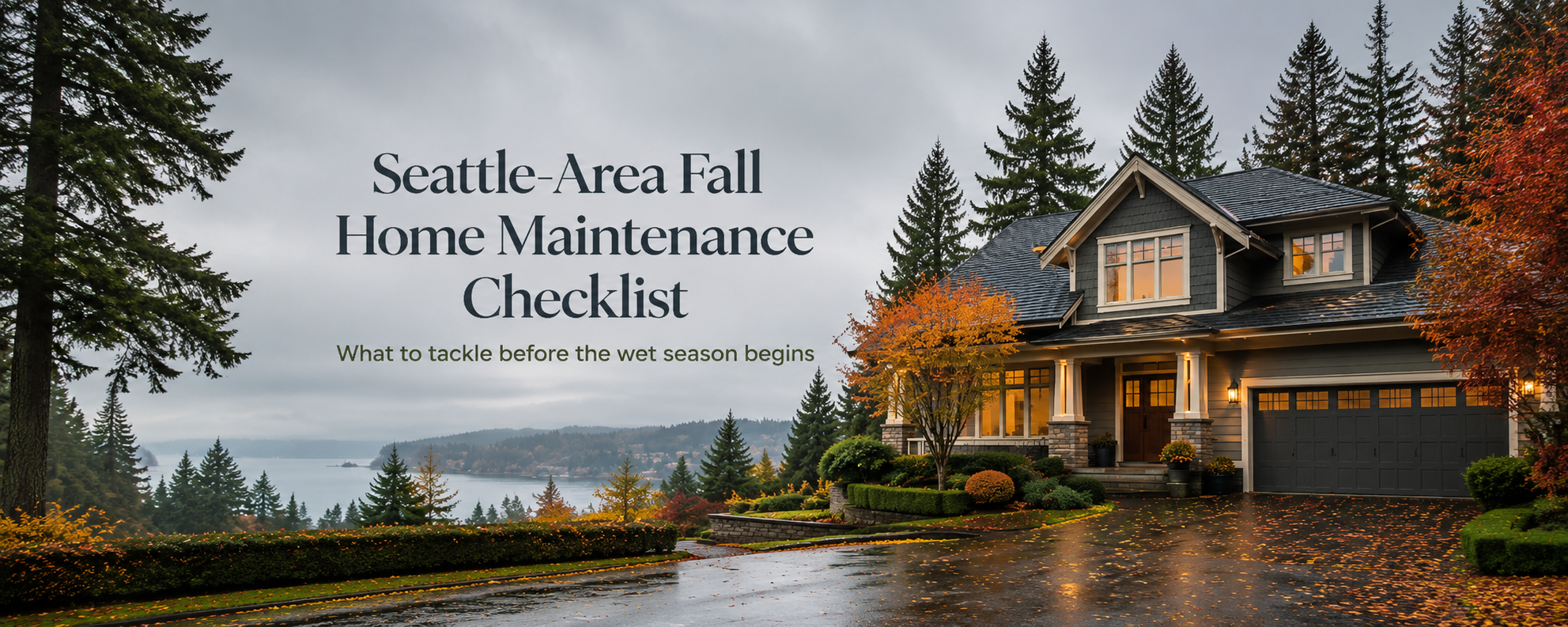
Seattle-Area Fall Home Maintenance Checklist: What to Tackle Before the Wet Season


What should Seattle-area homeowners and inherited-property owners do to prepare a house for the rainy season?

Focus on water management: inspect the roof, clean gutters, check exterior drainage, seal caulk around windows and doors, and make sure your heating system works before you need it.


Why Seattle Fall Maintenance Matters Right Now

Late summer in the Seattle area is the perfect time to walk around your home and look for the small problems that may become much more noticeable once the rain settles in. A loose gutter, cracked caulk, clogged drain, or questionable roof flashing might not seem urgent during a dry August, but several months of wet weather can change that quickly.

If you have inherited a property in King County or Snohomish County, this applies even more directly to you. Many inherited homes have years of deferred maintenance because the previous owner may have been elderly or dealing with health issues. When a house sits vacant during the wet season (October through April in our region, with roughly 37 inches of annual rainfall), small gaps become stained ceilings. Minor drainage issues become crawlspace flooding.

Here is the good news: you do not need to turn fall maintenance into a major renovation project. The goal is to make sure water goes where it is supposed to go, the exterior of the house is sealed up, and the systems you will rely on through fall and winter are ready to work. With 25 years helping Seattle-area homeowners prepare properties for sale, I can tell you that catching one small issue now is consistently easier and cheaper than dealing with it after weeks of rain.


Start With the Roof in Seattle's Tree-Heavy Neighborhoods

You do not necessarily need to climb onto the roof. From the ground, look for missing or damaged shingles, loose flashing, moss buildup, sagging areas, or anything else that looks different from the surrounding roofline.

Pay particular attention to areas around chimneys, skylights, vents, and roof transitions. These are common places for water to find its way in when seals or flashing begin to fail. North-facing roofs throughout the region are especially prone to moss accumulation, which traps moisture and accelerates shingle deterioration.

If you are managing an inherited property in Kenmore, Lake Forest Park, Shoreline, or Bothell, the heavy tree canopy in those areas means roofs collect far more debris than homes in newer, less wooded neighborhoods. In heavily treed areas like the streets around Burke-Gilman Trail in Kenmore or the established lots near Hamlin Park in Shoreline, you can expect significant needle and leaf accumulation even before the first October storm arrives.

If something looks questionable, having it inspected before the wetter months arrive is usually easier and far less expensive than discovering the problem because of a ceiling stain during a November downpour.


Moss Treatment and Prevention

Treat visible moss with zinc strips or moss-killing products. This is a maintenance item unique to the Pacific Northwest that many out-of-area probate heirs may not realize is necessary. Untreated moss growth is one of the most common inspection findings on inherited homes in our market.


Clean and Inspect Gutters and Downspouts Across King County

Gutters are especially important around the Seattle area because roofs can collect a surprising amount of needles, leaves, seed pods, and other debris. Peak leaf drop happens in October and November, so this is a job you may need to do twice this fall.

Here is what to check:

  • Gutter attachment: Look for sections pulling away from the fascia

  • Joint leaks: Water dripping between gutter connections means those joints need resealing

  • Overflow points: Any spot where water spills over the edge instead of flowing toward the downspout

  • Downspout direction: Water should discharge at least six feet from the foundation, not pool right beside the house

  • Gutter guards: If they are not already installed, this is the time to consider them

What I tell my clients is this: after the first substantial rain of the season, walk around the exterior while it is actively raining. Watching the system handle real water reveals overflowing gutters, leaking connections, and drainage problems that were invisible while everything was dry. That 10-minute walk could save you thousands.

For probate sellers managing a property in Kirkland, Edmonds, Brier, or Mountlake Terrace, I recommend scheduling a gutter cleaning service if you cannot do it yourself. The cost is modest, and the protection is significant.


Check Where Water Goes Once It Hits the Ground

Gutters are only part of the drainage system. Once the water reaches the ground, where does it go?

Check low spots near the foundation, driveway drains, catch basins, and any area where water has pooled in previous years. Clear leaves and debris before they can block drains, and make sure landscaping or recent yard work has not inadvertently created a path that directs runoff toward the house. The soil around your foundation should slope away from the structure with a minimum six-inch drop over ten feet.


Homes on Slopes Need Extra Attention

Many homes in Bothell, Kirkland, and the hillside neighborhoods of Seattle sit on slopes that present unique drainage challenges. Retaining walls, drainage channels, and visibly eroding areas are all worth inspecting before the ground becomes saturated. In crawl spaces and basements, look for standing water, unusual dampness, musty odors, or new staining.

Many older homes in Bothell, Brier, and low-lying areas of Kirkland rely on sump pumps. If that includes your property, test the pump now. Pour a bucket of water into the pit and confirm it activates and drains properly. A failed sump pump discovered in December is a very different situation than one caught in September.

With over 600 transactions closed across King County and Snohomish County, I have seen firsthand how a working sump pump and clean drainage can mean the difference between a smooth closing and a major repair negotiation.


Seal the Exterior: Caulk, Siding, Windows, and Doors

Walk slowly around the house and look at the places where different materials meet. Check caulking around windows and doors, penetrations for pipes and utilities, exterior trim, siding joints, and anywhere paint or sealant is beginning to fail.

Small gaps can allow moisture into places where it may take months before the damage becomes visible. In a market where buyers have more choices, sellers need stronger strategies, and condition matters more than ever. Presentation matters, and well-maintained, move-in-ready homes still sell quickly while deferred-maintenance properties sit.


What to Look For on Seattle's Older Homes

Peeling paint on wood siding or trim (exposed wood absorbs moisture rapidly in our climate)

Soft spots in trim boards or window sills

Discoloration that suggests water has been sitting against a surface

Gaps around utility penetrations where pipes, wires, or vents enter the structure

Failed weatherstripping around doors and windows

Wood siding is common in homes built during the 1950s through 1970s across Shoreline, Edmonds, Lake Forest Park, and Lynnwood. If you have inherited one of these homes, a careful walk around the exterior now can reveal repair needs that would otherwise surface during a buyer's inspection.


Give Trees and Vegetation Some Space

Summer growth can leave branches touching roofs, siding, or gutters. Trim vegetation back where appropriate and remove dead branches that could come down during windstorms, which are particularly common in exposed waterfront areas like Mukilteo, Edmonds, and waterfront Kirkland near Juanita Beach.

Keeping plants and debris away from the house also improves airflow and makes it easier to see what is happening along the foundation and exterior walls. This is also a good time to clear accumulated leaves, needles, and organic material from decks, exterior stairs, window wells, and other areas where they can hold moisture against the home.

For decks, power wash and seal them before the wet weather arrives. Wood decks deteriorate rapidly in Seattle's climate without annual treatment, and a rotting deck is one of the most visible red flags to potential buyers.


Prepare Your Heating System and Safety Devices

The first cold morning is a poor time to discover that the furnace or heat pump is not working properly. Replace or clean filters, test the system before you actually need it, and pay attention to unusual sounds, smells, or reduced performance. If maintenance is due, early fall is a convenient time to schedule it.


Special Considerations for Inherited Properties

Oil furnaces: Common in pre-1970s homes throughout the target area. Check the tank for leaks, as oil tank decommissioning is a significant issue in King County

Vacant property temperature: Set the thermostat to a minimum of 55 degrees to prevent pipe damage during rare cold snaps

Water leak detection: If the property will sit vacant for months during probate, consider a water leak detection system

Exterior faucets: Disconnect and drain outdoor hoses, shut off and drain hose bibs, and insulate exposed pipes in crawl spaces and garages

Smoke and carbon monoxide alarms: Test all units and replace batteries

If you are the Personal Representative of an estate, remember that you have a fiduciary duty to preserve estate assets. Reasonable property maintenance, including these seasonal tasks, falls squarely within that obligation. In King County, where 154,219 homes are fully paid off, many inherited properties carry substantial equity worth protecting.


A Simple Fall Maintenance Checklist for Seattle-Area Homes

Here is your quick-reference list for the next few weeks:

Roof: Inspect from a safe location for damaged shingles, moss, and failing flashing

Gutters: Clean thoroughly and confirm downspouts drain away from the foundation

Drainage: Clear exterior drains and watch for areas where water collects after rain

Exterior seals: Check caulk, siding, trim, and paint around all openings

Vegetation: Trim branches away from the house and clear organic debris from surfaces

Below-grade spaces: Look through the attic, crawl space, or basement for moisture signs

Heating system: Test before you need it and schedule maintenance if due

Safety devices: Test smoke and carbon monoxide alarms, replace batteries

None of these tasks require a contractor or a large budget. They require attention and a dry afternoon.


Frequently Asked Questions


Do I need to fix up an inherited Seattle home before selling?

You do not have to, but the current King County market rewards preparation. With active inventory up nearly 30% year-over-year and the average sale-to-list price ratio at 99.3%, buyers can afford to be selective. Addressing deferred maintenance, especially water-related issues, before listing typically yields a stronger sale price and fewer inspection-related repair requests.


How do I handle maintenance on a property I do not live near?

If you live out of state, consider arranging regular property checks. A trusted neighbor, a property management service, or a home watch service can walk the exterior monthly, confirm systems are working, and catch problems early. This is especially important during Seattle's October-through-April wet season.


What are the biggest fall maintenance risks for vacant homes in Seattle?

Water intrusion is the primary concern. Clogged gutters, failed caulk, and blocked drainage can all allow moisture into the structure. Vacant homes are also at risk for undetected pipe leaks, mold growth in poorly ventilated crawl spaces, and insurance complications, since standard policies may not cover vacant properties.


Will the estate reimburse me for maintenance costs on an inherited property?

Generally, yes. Reasonable maintenance expenses incurred by the Personal Representative to preserve estate assets are typically reimbursable from the estate. Keep detailed receipts for all work performed, and consult with the estate attorney if you are uncertain about specific expenditures.


When does Seattle's rainy season actually start?

The wet season typically begins in October and runs through April. September is your last reliable window of dry weather for exterior maintenance, caulking, painting, and drainage work. Planning your checklist now means completing tasks while conditions are cooperative.


How often should I clean gutters in the Seattle area?

At minimum twice each fall: once in late September or early October before the heavy rain begins, and again in late November after the peak of deciduous leaf drop. Properties in heavily wooded areas like Kenmore, Lake Forest Park, and parts of Bothell may need a third cleaning in January.


Should I treat moss on the roof of an inherited home?

Yes. Moss traps moisture against roofing materials and accelerates deterioration. Zinc strips installed near the ridge line help prevent regrowth. Moss removal is inexpensive relative to roof replacement and is one of the most common inspection findings on older Seattle-area homes.


What temperature should I set a vacant home's thermostat to?

Keep the thermostat at a minimum of 55 degrees Fahrenheit. While Seattle rarely experiences extended freezing temperatures, brief cold snaps do occur, and frozen pipes in an unattended house can cause catastrophic water damage.


How long does probate typically take in Washington State?

Probate in Washington typically takes 4 to 12 months. A Personal Representative must be appointed by the court before the property can be sold, and a Notice to Creditors provides a four-month claim window. Fall maintenance during this period protects the property's value for all beneficiaries.


Is fall a bad time to list a home in King County?

Seasonality matters, and homes listed in spring and summer typically sell faster. However, well-prepared homes can still sell in fall and winter. The key is that the property shows well and does not reveal deferred maintenance issues during a rainy-day showing. Completing your fall checklist now positions the home favorably regardless of when you list.


The Bottom Line

For Seattle-area homeowners and anyone managing an inherited property in King County or Snohomish County, September is your window. The dry weather is still cooperating, contractors are available, and you have time to address the small issues before they become expensive, visible problems.


Routine maintenance also has another benefit: it can reduce the number of deferred-maintenance issues that become visible during a future buyer's inspection. If selling your home is somewhere on the horizon and you are unsure which projects are worth addressing before a sale, I am always happy to help you prioritize the items that are likely to matter most to buyers. With 59 five-star reviews from past clients and 25 years serving sellers across Seattle, Kenmore, Bothell, Kirkland, Shoreline, Edmonds, Lynnwood, and the surrounding communities, we know what buyers notice and what inspectors flag. Reach out to Byler Real Estate at 206-601-8945 whenever you are ready to talk through your plan.

Posted in Home Owner Tips
Aug. 28, 2026

Who Owns the Sewer Line? What Seattle Homeowners Need to Know Before a Backup


Who is responsible for the sewer line that runs from your Seattle-area home to the public main, and what should you know before something goes wrong?

In Seattle, you own your side sewer all the way from your house to its connection with the public sewer main, even if that pipe runs beneath a sidewalk, planting strip, or street. That responsibility often surprises homeowners, and it can mean expensive repairs if the line fails.


Why This Matters Right Now for Seattle Homeowners

Most of the important systems in a home are at least somewhat visible. You can find the electrical panel, water heater, furnace, and plumbing fixtures without much trouble. Your sewer line is different. It quietly carries wastewater underground, sometimes for decades, and many homeowners never think about it until the drains stop working.

That creates an expensive surprise, particularly in older Seattle-area neighborhoods where side sewers may be made from clay, concrete, or other aging materials and run beneath mature trees. With the average single-family home age in King County at 56 years, a significant number of homes across Kenmore, Bothell, Kirkland, Lake Forest Park, Shoreline, and surrounding communities are sitting on pipes that were installed before many of their current owners were born. In my 25 years helping clients buy and sell homes across this region, I have seen sewer issues complicate and even derail transactions. Understanding who owns the pipe, where it runs, and what condition it is in can make a major difference before there is a backup.


How Seattle's Side Sewer Ownership Rules Work

Here is where Seattle differs from many other cities in the country. Within Seattle, the side sewer is privately owned all the way from the building to its connection with the public sewer main. Your responsibility does not stop at your property line.

A portion of the pipe may travel beneath a sidewalk, planting strip, alley, or street before reaching the city's sewer. Seattle Public Utilities maintains the public sewer main itself, while you are generally responsible for maintaining and repairing the side sewer up to, but not including, the connection fitting to that main.

What I tell my clients is that this distinction catches people off guard every time. With water lines, Seattle Public Utilities is responsible up to your property line. With sewer lines, you may own pipe that sits under a public street. If there is a break in that pipe between your property line and the connection to the city main, you are on the hook for the repair, including the cost of digging up and resealing the city street or sidewalk.


Shared Side Sewers Add Another Layer

In Seattle it is not uncommon to have two houses sharing one sewer line. The municipal code says that both owners are equally responsible for maintaining the shared line. If a shared side sewer needs repair, Seattle Public Utilities encourages all connected property owners to agree on the scope of repairs and which contractor to use, and recommends getting at least three bids before starting work.


Suburban Cities May Have Different Rules

For homeowners in Kenmore, Bothell, Kirkland, Shoreline, Brier, Mountlake Terrace, Edmonds, Lynnwood, Everett, Mukilteo, and other surrounding cities, sewer line responsibility rules vary by jurisdiction and utility district. Some suburban jurisdictions follow the more common model where homeowner responsibility ends at the property line. You should verify with your specific local utility provider. King County provides regional wastewater treatment, while local cities and sewer districts typically operate the local collection systems.


Why Older Seattle Neighborhoods Deserve Extra Attention

Neighborhoods like Ballard, with significant housing stock from the 1920s through 1950s, have side sewers that may be original clay or concrete pipe. Those mature street trees along residential streets are exactly the root-intrusion scenario Seattle Public Utilities warns about.

Tree roots seek water and nutrients, and an aging joint, crack, or defect in a clay pipe is exactly the kind of opening roots exploit. Minor roots may initially have little effect, but as growth becomes more substantial, roots can catch debris, restrict the pipe, and eventually contribute to backups. Seattle Public Utilities notes that simply removing the tree is not necessarily the solution because established root systems can extend significant distances. Repairing the pipe itself is often the more important issue.

Seattle also operates one of the few remaining combined sewer systems, meaning water runoff from your gutters combines with household wastewater in the same side sewer before entering the city system at the street. That adds volume and another variable to an already aging system.


What a Sewer Backup Could Cost You in the Seattle Area

So what is the financial exposure? A good rule of thumb is to budget $10,000 for a side sewer repair, but costs can reach $40,000. In extreme cases involving deep pipes and difficult soil conditions, repairs have exceeded $70,000 in Seattle. A repair that does not require digging could range from $60 to $200 per foot, while a repair requiring excavation in the public right of way would be significantly more costly.

Here is what makes this especially important if you have inherited a property or are going through probate. Homeowner's insurance typically covers only the pipes inside and under the house, not the section of pipe between the property line and the city main. Inherited properties may have lapsed or minimal coverage, and the previous homeowner may not have maintained or inspected the sewer line in years.

Having closed over 600 transactions across King County and Snohomish County, I can tell you that broken side sewers are a festering problem that can cost many thousands of dollars to repair and can complicate or even derail a home sale. Regular cleaning, which generally costs less than $1,500 and does not require a city permit, is one of the most overlooked preventive measures.


How a Sewer Scope Protects You Before Buying or Selling

A sewer scope is one of the simplest ways to learn what is happening inside a pipe you otherwise cannot see. A technician runs a small camera through the sewer line and records the interior. King County specifically recommends obtaining a side sewer inspection when purchasing a house.

A good sewer scope may reveal:

  • Root intrusion

  • Cracks and fractures

  • Offset joints

  • Pipe deterioration

  • Standing water or obstructions

  • Areas that have previously been repaired

  • Changes in pipe material

The inspection costs roughly $300 to $500, and that context is critical. Seattle Public Utilities distinguishes between minor, moderate, and severe defects. Some conditions warrant periodic monitoring, while others justify cleaning, repair, or replacement. The goal is not to produce a frightening video of an old pipe. It is to understand whether defects actually affect function or structural condition and whether they are getting worse.

If you are selling an inherited property in the Shoreline, Lake Forest Park, or Bothell area, a pre-sale sewer scope removes one of the biggest unknowns from the transaction. Washington State law requires sellers to disclose known material defects. If you have never lived in the property, you may not know the sewer condition, but a $300 to $500 scope can give you clarity before a buyer's inspector finds something that stalls your closing.


Warning Signs Every Seattle Homeowner Should Watch For

A complete sewer backup is obvious. Earlier warning signs are easier to overlook. When several fixtures drain slowly, problems repeatedly return after clearing, or unusual sewer odors develop, the side sewer deserves attention.

Watch for:

Multiple drains becoming slow simultaneously

Recurring drain or sewer clogs

Sewer odors inside or outside the home

Wastewater backing up into a low drain

Toilets behaving unusually when other fixtures drain

A known history of root intrusion or sewer repairs

If actual wastewater begins backing up through a sink, toilet, bathtub, or floor drain, treat that as an active sewer backup. Exposure to wastewater presents health risks, so address the problem promptly rather than treating it like an ordinary clogged drain.


Financial Assistance and Practical Steps for Seattle Homeowners

Seattle offers two programs for qualifying households. The Home Repair Loan Program provides zero-interest loans starting at $3,000 for health, safety, and structural housing issues, including sewer line repairs. This assistance is available to low to moderate income homeowners living in owner-occupied single-family homes. Some homeowners may qualify for deferred loans with no monthly payments. Even homeowners who do not meet the standard qualifications may sometimes receive Home Repair Grants, so it is still worth contacting the Seattle Office of Housing at (206) 684-0458.

For probate sellers who do not live in the inherited property, these owner-occupancy programs may not apply. However, understanding the sewer condition before listing gives you the information you need to price appropriately, negotiate confidently, or make targeted repairs that protect your sale.


Know Where Your Line Runs

Seattle has historical side sewer information that homeowners can use to locate their line. Knowing the route becomes important before planting trees, building a deck, installing a fence, adding a structure, reworking a driveway, or performing major landscaping. You do not want the first time you discover the sewer route to be after someone digs into it.


Frequently Asked Questions


Who owns the sewer line in Seattle?

You do. Within the City of Seattle, the property owner is responsible for the side sewer from the building all the way to its connection with the public sewer main, which is maintained by Seattle Public Utilities. This means your responsibility may extend beyond your property line, under sidewalks or streets.


Does my responsibility end at my property line in Seattle?

No. Unlike water lines, where Seattle Public Utilities is responsible up to your property line, sewer line ownership in Seattle extends past the property boundary. You may own pipe that sits beneath a public sidewalk, planting strip, or street.


What if my Seattle home shares a sewer line with a neighbor?

Shared side sewers are common in Seattle. The municipal code says both owners are equally responsible for maintaining the shared section. Seattle Public Utilities encourages neighbors to agree on the scope of repairs and contractor selection and recommends getting at least three bids.


How much does a sewer line repair cost in the Seattle area?

A reasonable budget is $10,000, though repairs can reach $40,000 depending on location and pipe depth. Repairs not requiring excavation range from $60 to $200 per foot. In extreme cases involving deep pipes and difficult conditions, costs have exceeded $70,000.


What is a sewer scope and how much does it cost?

A sewer scope involves running a small camera through the sewer line to record the pipe's interior condition. The inspection typically costs $300 to $500. King County recommends obtaining a side sewer inspection when purchasing a house.


Does homeowner's insurance cover sewer line repairs?

Homeowner's insurance typically covers only the pipes inside and under the house. The section of pipe between the property line and the city main is usually not covered. Check your policy, especially if you have inherited a property with older or lapsed coverage.


What are common causes of sewer line failure in Seattle?

Tree roots, cracked pipes, offset joints, grease buildup, flushing inappropriate materials, and general deterioration of aging clay or concrete pipes are the most common causes. Seattle Public Utilities identifies these as frequent defects found during inspections.


Are there financial assistance programs for sewer repairs in Seattle?

Yes. The Seattle Office of Housing offers zero-interest Home Repair Loans starting at $3,000 for qualifying owner-occupants. Some homeowners may also qualify for grants. Contact the office at (206) 684-0458 for current income requirements and application details.


How often should I inspect my sewer line?

Experts recommend having someone camera the line every 18 months, particularly for older homes or properties with mature trees nearby. Regular cleaning can help prevent costly repairs and generally costs less than $1,500 with no city permit required.


Do suburban cities like Kenmore, Bothell, and Kirkland follow the same sewer rules as Seattle?

Not necessarily. Sewer line responsibility rules vary by jurisdiction and utility district. Many suburban jurisdictions follow the more common model where homeowner responsibility ends at the property line. Always verify with your specific local utility provider.


The Bottom Line

Your sewer line may be underground and out of sight, but it is still an important part of the home you own. In Seattle, homeowner responsibility extends all the way to the connection with the public sewer main. Elsewhere in King County and Snohomish County, exact responsibility varies by local utility.

Three pieces of information give you a very good start: know where your side sewer runs, know roughly how old it is, and know what condition it is in. Those are much easier questions to answer before there is wastewater coming back through the floor drain.


If you are selling an inherited property, preparing a home for market, or simply want a clear-eyed understanding of what is underground, I am happy to walk you through the process and connect you with trusted local contractors. When considering whether it's the right time to buy, understanding your home's sewer infrastructure is part of that decision. With 25 years of experience and 59 five-star reviews from past clients, I work with homeowners across Seattle, Kenmore, Bothell, Kirkland, Lake Forest Park, Shoreline, and the surrounding area every day. Reach out to me, Chris Byler at Byler Real Estate, at (206) 601-8945 to get started.

Posted in Home Owner Tips
Aug. 27, 2026

September Market Preview: What to Watch

What should buyers and sellers in Kenmore and Lake Forest Park watch heading into September 2026?

September brings more inventory, pickier buyers, and a market that rewards preparation over assumption. If you own or have inherited a home in Kenmore or Lake Forest Park, your window to sell strategically is open, but it requires sharper pricing and better presentation than even six months ago.


Why This Matters Right Now in Kenmore and Lake Forest Park

The spring rush is behind us. Summer vacations are winding down. And the market you are stepping into this September looks noticeably different from the extremely inventory-constrained conditions homeowners in this area became accustomed to in recent years.

Northwest MLS data shows more homes available, somewhat slower buyer activity, and a market gradually moving toward greater balance. King County inventory is up 23.7% year-over-year, and Snohomish County inventory has jumped 34.7%. The 30-year fixed mortgage rate sits at 6.66% as of August 27, 2026, according to Freddie Mac.

For probate and inherited-property sellers in particular, this shift changes the math on every decision you are facing, from whether to invest in repairs to how aggressively you can price. With 25 years in this business and over 600 closed transactions across North Seattle, the Eastside, and South Snohomish County, the team at Byler Real Estate understands the dynamics of choosing the right agent to sell your home in this market. September 2026 is not a crisis, but it is absolutely a market that punishes guesswork. Let me walk you through what to watch.


Kenmore Inventory Is Rising, and Buyers Are Noticing

One of the clearest trends heading into September is the increase in available homes, and Kenmore is no exception. Only about 21% of Kenmore homes are selling above list price, down nearly 40 points year-over-year. About 15.8% of listings have seen price reductions. Those numbers tell you something important: buyers have more choices, and sellers need more strategy.

In North Kenmore along Holmes Point Drive near Log Boom Park, waterfront and near-park properties still command premiums. Kenmore's median single-family home price reached $1.145M in May 2026, with the median listing price running around $970K depending on the neighborhood. But in South Kenmore near Finn Hill and the Juanita Drive NE corridor, the median listing price sits at $844K, with newer townhome communities trading below that figure.

What does this mean for you? If you have inherited a property in Kenmore and you are weighing a September listing, you need to understand that your competition is no longer theoretical. Buyers can see the alternatives immediately, and they are comparing condition, updates, and value more carefully than at any point in recent memory. Northshore School District demand and SR-522 access to both Seattle and the Eastside keep the buyer pool deep, but well-priced homes are now moving with more scrutiny on condition.


Lake Forest Park Faces a Sharper Inventory Shift

Lake Forest Park experienced a sharp July increase in months of inventory, a micro-market shift that stood out even within King County's broader inventory growth. This is one of the most relevant local stories heading into September.

In July 2026, Lake Forest Park homes were listed at a median price of $1.09M at $473 per square foot. Neighborhoods like Horizon View, Edgewater-Riviera, and Sheridan Heights tend to hold their value well because of the water access, mature tree canopies, and the overall lifestyle Lake Forest Park is known for. But holding value and commanding aggressive pricing are two different things in a market where buyers suddenly have comparison points they did not have six months ago.

If you are managing a probate sale for a home along Brookside Blvd NE or near the Sheridan Beach and Lake Forest Park Beach Club area, do not assume that the prestige of the neighborhood automatically justifies top-of-market pricing. Waterfront homes and larger estate properties may exceed the conforming loan limit and require jumbo or portfolio loan options, which further narrows your buyer pool. Pricing your home correctly against actual active competition is not optional this September; it is the difference between attracting offers and watching your listing sit.


Why Probate and Inherited Property Sellers Need to Act Differently

You are not a typical seller. If you have inherited a home in Kenmore or Lake Forest Park, you are likely dealing with emotional weight, legal complexity, and a property that may not have been updated in years. Many inherited homes in this area were built in the 1950s through 1980s and may need work on roofing, electrical, plumbing, or foundation systems.

Here is what I tell my clients navigating probate sales: the stepped-up cost basis you receive at the date of death can potentially eliminate capital gains tax if you sell promptly, which is a significant financial advantage. But every month you hold the property, you are carrying property taxes (King County averages approximately 1% of assessed value), insurance, utilities, and maintenance costs. Washington State allows personal representatives with non-intervention powers to sell property without court approval, which can speed up your timeline considerably.

The strategic question is not simply "sell now or sell later." It is: what does September's competitive landscape mean for a property that may need work? In this market, buyers have enough options to pass over homes with deferred maintenance because another suitable option is available nearby. As a Certified Home Selling Advisor and Master Certified Negotiation Expert, my recommendation is always to focus preparation on what adds measurable value, not on perfection.


Pricing Strategy in Kenmore and Lake Forest Park This September

Pricing correctly at the beginning of a listing has always mattered, but the consequences of getting it wrong become greater as inventory rises. In a very tight market, buyers may pursue a home even if the asking price feels aggressive because they have few alternatives. When supply increases, they can simply compare and walk away.

Here is what you should be tracking before you set a price:

  • Number of competing homes in your immediate area and price range

  • How long comparable properties have remained active

  • Recent price reductions in Kenmore or Lake Forest Park

  • Pending sales to gauge current buyer activity

  • Condition of competing listings relative to your property

  • How closely recent sales matched their original asking prices

The Northwest MLS service area had approximately 3.74 months of inventory in July. That is approaching, but not yet at, the four-to-six month range that defines a balanced market. The goal is not to be the cheapest listing on the block. The goal is to make the value proposition unmistakably clear from day one.

With 59 five-star reviews from past buyers, sellers, investors, and homeowners, I have seen what happens when sellers price based on what they hope their home is worth versus what the data supports. In this market, overpriced listings do not attract lowball offers. They attract no offers at all.


What Buyers Should Watch in Kenmore and Lake Forest Park

If you are buying in Kenmore or Lake Forest Park this September, you have more selection than you have had in years. Use it wisely, but do not assume every seller will accept a substantial discount.

Homes priced between $750,000 and $1 million continue to attract strong demand across King County, with more than half going under contract within 30 days. In Kenmore, that price range captures a significant portion of the single-family market, especially in South Kenmore near Moorlands Elementary and Northshore Middle School. In Lake Forest Park, you may be looking at homes that need updating at that price point, which could be an opportunity if you are comfortable with renovation.

Stay financially prepared. If an especially strong property appears in Sheridan Heights or near Log Boom Park, desirable homes may still move faster than the broader averages suggest. Keep your pre-approval current and your timeline realistic.


Frequently Asked Questions


Is September a good time to sell an inherited home in Kenmore?

September can work well because families return from vacations and buyers who paused their search during summer re-engage. However, you are also approaching the seasonal slowdown. A well-prepared, accurately priced listing in Kenmore can still reach motivated buyers who want to close before year-end, but presentation and pricing matter more than they did in spring.


How long are homes taking to sell in King County right now?

According to current Northwest MLS data, homes in King County are selling in a median of 14 days. However, that figure varies by neighborhood, price range, and condition. Properties with deferred maintenance or aggressive pricing may sit considerably longer, especially as inventory continues to rise.


What is the current mortgage rate affecting buyers in Lake Forest Park?

As of August 27, 2026, Freddie Mac reports the average 30-year fixed mortgage rate at 6.66%. At that level, buyers are closely watching monthly payments, not just purchase prices. This can affect demand for higher-priced Lake Forest Park homes that may require jumbo financing.


Do I need to renovate an inherited home before selling in this market?

Not necessarily, but presentation matters more than it has in years. Clean, well-maintained, move-in-ready homes still sell quickly. Focus preparation on what adds measurable value: curb appeal, professional cleaning, minor repairs, and staging. We coordinate vendor support for exactly this process.


How much inventory is available in King County compared to last year?

King County has seen active inventory increase by 23.7% year-over-year. Across the full Northwest MLS service area, there are 24,888 active listings, nearly 20% more than one year ago. Buyers have more choices, and sellers face more direct competition.


What is the stepped-up basis, and why does it matter for inherited property?

When you inherit property, its tax basis "steps up" to fair market value at the date of death. This can potentially eliminate capital gains tax if you sell promptly. Given King County's high property values, this benefit can represent significant tax savings and is one of the strongest reasons to evaluate your timeline carefully.


Are homes in Kenmore still selling above asking price?

Only about 21% of Kenmore homes are currently selling above list price, down nearly 40 points year-over-year. The average sale-to-list price ratio across King County is 99.3%. Well-priced homes can still generate competition, but buyers have more room to negotiate than they did previously.


What are carrying costs on an inherited home while I wait to sell?

You are responsible for property taxes (approximately 1% of assessed value in King County), homeowner's insurance, utilities, and any mortgage payments or HOA dues. These costs add up quickly, especially on higher-value properties in Kenmore and Lake Forest Park.


Can I sell an inherited home without going through full probate court?

In Washington State, if the personal representative is granted non-intervention powers, you can sell property without court approval. This is a significant advantage for faster sales. The full probate process typically takes 4 to 12 months, but non-intervention powers can streamline the real estate transaction considerably.


How different is the Lake Forest Park market from nearby areas?

Lake Forest Park experienced a sharp July increase in months of inventory that stood out even within King County's broader trend. Meanwhile, different neighborhoods, property types, and price ranges can move in different directions simultaneously. This summer, Kirkland briefly surpassed Bellevue in median residential sale price. These local variations are exactly why citywide headlines rarely tell the complete story.


The Bottom Line

September 2026 brings more options for buyers, more competition for sellers, and mortgage rates that continue to pressure affordability across Kenmore, Lake Forest Park, and the broader North Seattle market. This is not a crisis. It is a more selective market that rewards preparation, realistic pricing, and professional presentation.


If you are managing a probate or inherited property sale and wondering how September's market affects your timeline, I am happy to walk you through the specific numbers for your neighborhood. With over 600 transactions closed and 25 years serving Kenmore, Lake Forest Park, Bothell, Kirkland, and the surrounding communities, we keep the process straightforward: Plan, Prep, Promote, Negotiate. You can reach me, Chris Byler at Byler Real Estate, at 206-601-8945 to talk through your situation, no pressure involved.

Posted in Market Updates
Aug. 26, 2026

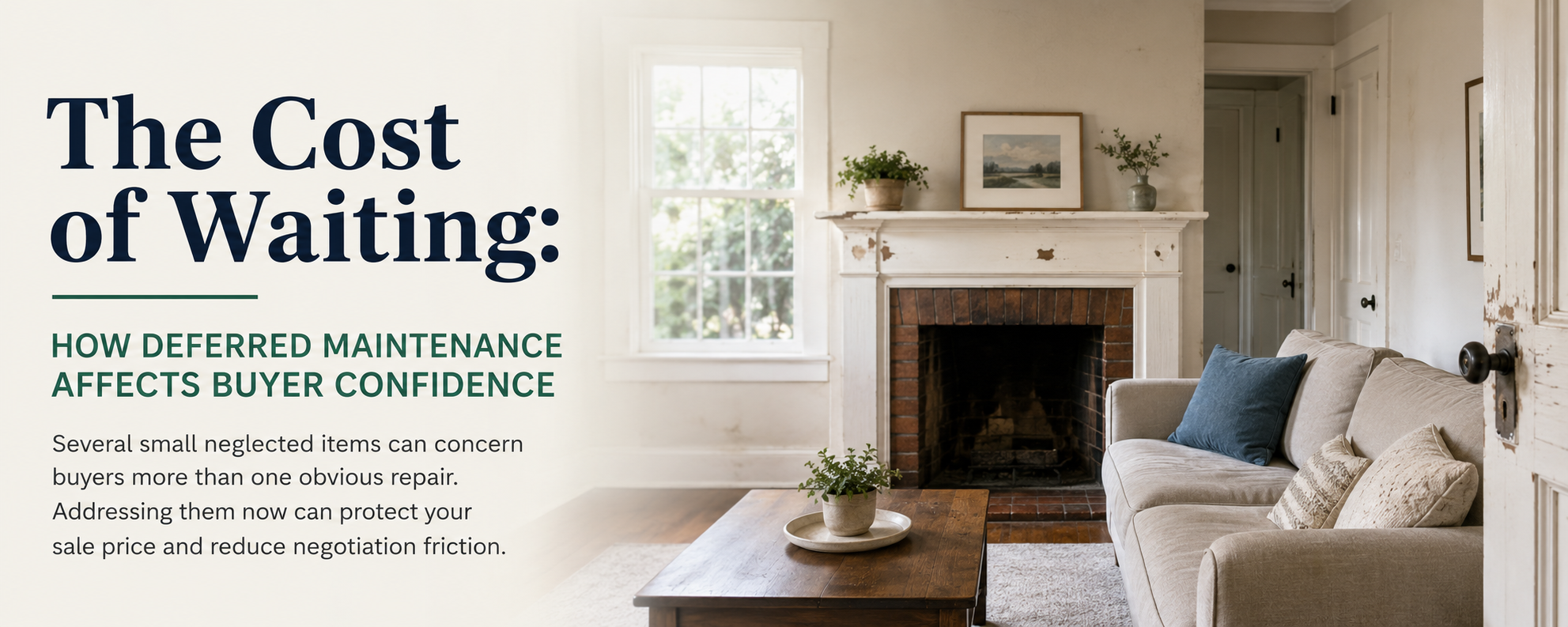
How Deferred Maintenance Costs Sellers Buyer Confidence


What is the real cost of waiting to fix deferred maintenance before selling an inherited home in?

Deferred maintenance does not just increase your repair bill. It erodes buyer confidence, extends your days on market, and often reduces your final sale price by more than the repairs themselves would have cost.


Why This Matters for Lynnwood and Kirkland Sellers Right Now

If you have inherited a property in Lynnwood or Kirkland, you are entering a market that has shifted meaningfully in 2026. Active listings across King County increased by 41.63% for single-family homes, and Snohomish County inventory is at its highest level in at least 10 years. Buyers now have enough options to be selective, and they are concentrating on homes that line up on price, condition, and presentation.

What does that mean in practical terms? It means a Kirkland home near Juanita with peeling trim and a sticking front door is competing against updated listings where sellers did the boring prep work first. And a Lynnwood home near the new Link Station with clogged gutters and a running toilet sends a message before a buyer even opens the hall closet. In a market with rising inventory and about 20% of active listings already carrying at least one price cut, you cannot afford to hand buyers reasons to hesitate.


How Buyers in Interpret Deferred Maintenance

When buyers walk through a home, they are not just evaluating the kitchen or the yard. They are asking themselves a quieter question: "Has this home been cared for?"

A clean entry, tight railings, working fixtures, and tidy landscaping all reinforce confidence. Peeling paint, loose hardware, water stains, damaged caulking, broken screens, and doors that do not latch properly send the opposite signal. No single issue necessarily means very much on its own. What matters is the pattern buyers perceive across the property.


Why Small Problems Feel Bigger Than One Large One

Consider two scenarios. A home with an older roof but otherwise clean, functional systems. The landscaping is tidy, the trim is solid, and the mechanical areas are orderly. A buyer can reasonably view the roof as one known future expense and price accordingly.

Now picture a home with a newer roof but a running toilet, several loose cabinet doors, peeling exterior paint, a wobbly railing, damaged baseboards, overflowing gutters, and a bathroom fan clogged with dust. The actual repair cost of those smaller items may be far less than a roof replacement, but the second home feels riskier. Buyers begin connecting dots: "If these visible things were not taken care of, what else has been ignored?"

That perception gap is one of the hidden costs of deferred maintenance, and it creates uncertainty that directly affects offers.


Why Inherited Properties in Lynnwood and Kirkland Face Extra Scrutiny

Inherited homes carry a unique set of challenges. A 2023 homeowner survey found that 44% of homeowners delayed routine upkeep, and 31% postponed necessary repairs or renovations. For elderly homeowners or those who were ill, these deferrals often stretch across years or even decades before the property transfers to heirs.

King County includes 154,219 fully paid-off homes, a significant portion of which will eventually transfer through inheritance. If you have inherited one of these properties, you likely have substantial equity but may lack the liquid funds or the familiarity with the property to know exactly what needs attention.

With 25 years in this market and over 600 transactions closed across Lynnwood, Kirkland, Kenmore, Bothell, and surrounding communities, I have walked through many inherited homes where the owners did not realize how much small, accumulated maintenance was shaping buyer perception. The furnace filter had not been changed in years. The deck boards along the back had softened. The bathroom caulking had pulled away from the tile. None of these items individually was expensive to fix, but together, they told a story that made buyers cautious.


Buyers Overestimate What They Do Not Understand

Experienced homeowners may look at a dripping faucet and know it needs an inexpensive cartridge. A buyer who does not know the cause simply sees "plumbing problem." The same thing happens with small ceiling stains, sticking windows, rusty fittings, and sagging gates. When people are uncertain about a problem, they tend to account for risk by mentally assigning a much larger cost than the repair actually requires.


How Deferred Maintenance Affects Appraisals and Financing in King County

Buyer perception is only half the story. Deferred maintenance can directly impact appraisals and inspection results. Appraisers consider condition when determining value, and a home with noticeable neglect may appraise lower than similar well-maintained properties. In a market where the median home sale price in King County is $890,000, even a small percentage shortfall on an appraisal can mean tens of thousands of dollars.

When inspection reports grow lengthy with missing caulking, loose railings, plumbing drips, deteriorated trim, worn deck boards, and failed window seals, negotiations often become more difficult. Buyers request larger credits, more repairs, or a lower price because the property now feels like it requires more work than they anticipated.

The appraisal challenge is especially real for financed purchases. When considering what are some of the financial considerations of buying a home, lenders may not be as willing to fund a property with visible deferred maintenance, which can narrow your buyer pool to cash offers that typically come in lower.


The Downward Spiral: Days on Market to Price Reductions

Homes that show signs of neglect typically sit on the market longer. In Kirkland, where the average home price is $1,214,769 (down 2.5% year over year), extended days on market signal to new buyers that something may be wrong, even if the issues are mostly cosmetic. That leads to price reductions, which further erode confidence. Buyers hesitate. The home sits. The cycle repeats.

Across King County, total active listings increased nearly 30% from April 2025 to April 2026. Demand is still present, but as market data consistently shows, buyers are punishing lazy pricing and unprepared listings.


The Most Valuable Pre-Listing Repairs Are Often the Boring Ones

Before selling, homeowners sometimes jump immediately to countertops, new appliances, or trendy lighting. Those improvements can help, but they are not always the best starting point.

Often, the more important work is less glamorous:

  • Tightening a railing along a Lynnwood deck before it becomes an inspection item

  • Stopping a dripping faucet so buyers do not mentally file it under "plumbing problem"

  • Replacing worn caulking in bathrooms and around windows

  • Repairing damaged exterior trim, especially on Kirkland homes near Juanita where the lake-effect moisture accelerates wear

  • Cleaning gutters and downspouts, particularly on hillside homes above SR-522 in Kenmore where drainage concerns are already on every buyer's mind

  • Replacing burned-out bulbs and repairing broken screens

  • Fixing doors that stick or do not latch properly

These projects are rarely exciting, but with 59 five-star reviews from past clients, I can tell you that my most successful listings share one thing in common: they handled the boring stuff first. What a thoughtful home prep plan looks like before listing follows a clear sequence—Plan, Prep, Promote, Negotiate—and the Prep phase almost always starts with these mundane but high-impact maintenance items.


Dated Is Not the Same as Neglected

This distinction matters enormously for inherited properties. A home can have original cabinets, older countertops, and traditional tile and still feel well maintained. Buyers generally understand the difference between something that is simply older and something that has not been cared for.

A dated kitchen may lead a buyer to think, "I may update this someday." Peeling paint, leaking fixtures, damaged trim, and broken hardware may lead them to think, "What else am I going to have to fix?"

You do not necessarily need to remodel a dated inherited home before listing it. Maintenance and condition deserve attention first.


A Pre-Listing Walk-Through You Can Do Today

Before listing, walk through the home as if you have never seen it before.

Exterior first: Driveway, landscaping, walkways, exterior paint, front entry, gutters, lighting

Interior next: Doors, faucets, cabinets, flooring, trim, walls, windows, fixtures

Utility areas last: Garage, water heater, mechanical systems, crawl space access

Separate your findings into four categories:

Safety items (non-negotiable, fix immediately)

Active problems (leaks, electrical issues, anything getting worse)

Deferred maintenance (the accumulated small items that create the pattern)

Cosmetic improvements (paint, staging, updates)

Organized maintenance records, showing furnace servicing, roof work, water heater replacement, or permitted electrical work, can provide another layer of reassurance that reduces buyer uncertainty.


Frequently Asked Questions

Does deferred maintenance really lower my sale price in Kirkland?

Yes. Homes with visible deferred maintenance can sell for several percentage points less than well-maintained comparable properties. In Kirkland, where median prices range from $1.2M to $1.4M depending on the neighborhood, even a small percentage reduction represents a significant dollar amount. Buyers price their perceived risk into offers.


Should I sell an inherited Lynnwood home as-is or make repairs first?

It depends on the specific condition and your financial situation. Selling as-is typically narrows your buyer pool to investors and cash buyers who offer below market value. Addressing visible maintenance items, even without major remodeling, usually broadens your buyer pool and improves your net proceeds.


What are the most common deferred maintenance issues in inherited homes?

The most frequent issues include dripping faucets, loose railings, peeling exterior paint, damaged caulking, worn deck boards, clogged gutters, broken screens, sticking doors, failed window seals, and neglected landscaping. Individually minor, together they create a pattern of neglect that undermines buyer confidence.


How do buyers in King County react to long inspection reports?

When inspection reports are lengthy with accumulated small items, negotiations often become more difficult. Buyers may request larger credits, more repairs, or a lower price because the property feels more troublesome than they originally expected. Addressing visible maintenance before listing can shorten that report.


Can deferred maintenance affect my home's appraisal in Snohomish County?

Absolutely. Appraisers consider condition when determining value. Deferred maintenance over a protracted period often results in depreciation of a property's appraised value, which can mean a lower loan amount for financed buyers and potentially a deal falling through entirely.


How much does it cost to fix common deferred maintenance items before listing?

Most individual items, like replacing caulking, fixing a dripping faucet, or tightening a railing, cost under a few hundred dollars each. The collective investment is typically a fraction of the price reduction you would face by listing with those issues visible.


Does curb appeal really matter that much for Lynnwood and Kirkland homes?

Exterior issues are especially influential because buyers see them before stepping inside. Peeling trim, moss-covered surfaces, overgrown landscaping, and dirty gutters shape the buyer's first impression. If the exterior feels uncared for, buyers walk through the front door already expecting more problems inside.


How long do homes with deferred maintenance sit on the market in King County?

The current median days on market in King County is 14 days for well-prepared homes. Homes with visible neglect typically sit significantly longer. Extended time on market signals to new buyers that something may be wrong, creating a downward spiral of further price reductions.


What is the difference between a dated home and a neglected home?

A dated home has older finishes but feels maintained: doors work, fixtures function, surfaces are clean, and systems have been serviced. A neglected home shows accumulated signs that upkeep was deferred. Buyers can distinguish between the two, and they respond very differently to each.


Should I hire a professional to assess maintenance before listing an inherited property?

A pre-listing walk-through with an experienced agent is a strong first step. With 25 years helping sellers across Lynnwood, Kirkland, Kenmore, and Bothell, I use a structured pre-listing preparation process that identifies the specific items most likely to affect buyer confidence, so your time and money go where they matter most.


The Bottom Line

Deferred maintenance has two costs. The first is obvious: small problems become larger and more expensive over time. The second is less visible but critical when selling. Neglected details reduce buyer confidence, extend your days on market, and invite lower offers.

In the 2026 Lynnwood and Kirkland markets, with inventory rising and buyers more selective than they have been in years, preparation matters more than ever. You do not need to renovate everything. You need to break the pattern of neglect so buyers can focus on the home's strengths rather than wondering what problems are hiding beneath the surface.


If you have inherited a property in King County or Snohomish County and you are not sure where to start, I am happy to walk through the home with you and prioritize what matters. Call Chris Byler at 206-601-8945 or visit Byler Real Estate to set up a no-pressure consultation. We will Plan, Prep, and position your property to sell with confidence.

Posted in Listing Tips
Aug. 25, 2026

Lynnwood Community Spotlight: Light Rail, Alderwood, Parks and a City in Transition

What makes Lynnwood one of the most interesting communities in south Snohomish County right now, and what should property sellers know about a city that is actively changing?

Lynnwood is no longer just a convenient suburb between Seattle and Everett. With light rail now operational, redevelopment reshaping City Center and Alderwood, and more than 350 acres of parkland most people do not even know about, it is a city balancing transformation with the established neighborhoods that have defined it for decades.

Why Lynnwood Matters for Property Owners Right Now

For years, Lynnwood has been one of south Snohomish County's most convenient communities. It sits near the intersection of I-5 and I-405, provides easy access to both King and Snohomish counties, and has long been one of the region's major shopping and employment centers. But today's Lynnwood is becoming something different. Light rail, new housing, redevelopment around City Center and Alderwood, expanding pedestrian connections, and long-term planning for a more walkable urban center are gradually changing the community.

What does that mean if you own property here, especially if you have inherited a home or are managing a probate situation? It means the value of your property is being influenced by forces that did not exist even three years ago, and understanding those forces is the difference between leaving money on the table and making a confident, informed decision. With 25 years of experience helping sellers across Lynnwood, Kirkland, and the broader Seattle area, I have watched this city evolve through multiple cycles. This one feels different because the infrastructure investments are permanent.

How Light Rail Changed Lynnwood's Position in the Region

Lynnwood City Center Station opened in 2024 as part of the Lynnwood Link Extension. Today, the station is served by both Link's 1 and 2 Lines in addition to numerous regional and local bus routes. From Lynnwood City Center Station, you can reach downtown Seattle in approximately 30 to 35 minutes by rail, no I-5 required.

That single change altered Lynnwood's commute calculus. For Amazon, Microsoft, or University of Washington employees who can work near transit, this changes the math on living in Lynnwood entirely. Your property no longer competes only with other Snohomish County communities; it competes with neighborhoods across the entire Link rail network.

The Interurban Trail, approximately 3.8 miles of mostly traffic-separated path within Lynnwood, also provides direct non-motorized access to City Center Station. Interestingly, this modern walking and cycling corridor follows the route of the former Interurban Railway, which once carried electric rail cars between Seattle and Everett. So one of Lynnwood's newest transportation connections literally traces the path of one of its oldest.

If you are selling an inherited home in an established Lynnwood neighborhood, this transit connection is now part of your home's story, even if the property itself is miles from the station. Buyers factor commute options into every purchase decision, and light rail expanded what "commutable from Lynnwood" actually means.

Alderwood and City Center: Redevelopment Reshaping Lynnwood's Core

The City adopted its City Center plus Alderwood Subarea Plan in June 2025. The planning area covers approximately 1.2 square miles, and the goals include more housing, additional employment, transit-oriented development, better walking and cycling connections, parks and trails, and improved connections between City Center and Alderwood.

Alderwood itself has evolved well beyond conventional mall shopping. The dining ecosystem surrounding the area now includes Korean barbecue, hot pot, sushi, bakeries, cafes, steakhouse dining, and fast-casual options. Alderwood lists nearly 40 dining choices alone. The broader Lynnwood restaurant scene, highlighted by the city's own tourism organization, extends that diversity even further with Korean, Vietnamese, Mexican, seafood, Greek, and South American cuisines along the Highway 99 corridor.

A future light rail station near West Alderwood is also anticipated as part of the Everett Link Extension. For property owners in surrounding neighborhoods like Alderwood and Lynndale, this planned expansion could add another layer of transit accessibility to your location.

What I tell my clients is straightforward: redevelopment does not change the value of your home overnight, but the direction is clear. Portions of Lynnwood that historically developed around cars, shopping centers, and major highways are gradually being planned as denser, more connected neighborhoods. That trajectory matters when buyers evaluate long-term livability.

Lynnwood's Parks and Green Spaces Tell a Different Story

Spend all your time around Alderwood or Highway 99 and you might think of Lynnwood primarily as an urban commercial center. The park system tells a completely different story. Lynnwood maintains more than 350 acres of parkland, over 100 acres of natural open space, and approximately 14 miles of trails.

Lynndale Park is the flagship, roughly 22 acres of preserved native Northwest forest alongside athletic fields, tennis and basketball courts, a skate park, playground, picnic areas, and an outdoor amphitheater that hosts Shakespeare in the Park each summer. Five minutes from a major mall, and you are walking through mature fir and cedar. Single-family homes near Lynndale Park currently range from $780,000 to $900,000 or more.

Scriber Lake Park sits near the center of the city, a wetland and lake habitat used by fish, waterfowl, songbirds, and small mammals. Trail and pedestrian upgrades are currently underway, directly tying this green corridor into the city's larger transit and walkability strategy. A trail does not have to be purely recreational; it can also help residents reach transit, businesses, and neighborhoods without driving.

For probate sellers in particular, these parks are worth mentioning because they are often the amenities that make established neighborhoods desirable. If your inherited property is in a mature, tree-lined neighborhood near Lynndale Park or Scriber Lake, that setting is genuinely hard to replicate in newer construction. Buyers notice.

Lynnwood's 2026 Housing Market: What the Numbers Actually Tell You

The median residential sale price in July 2026 was $779,990, up 1.3% from June and approximately 7.6% higher than July 2025. At the same time, Lynnwood finished July with 198 homes for sale, an increase of approximately 43.5% from one year earlier. New listings were 22.2% higher year over year.

So does more inventory mean trouble for sellers? Not exactly. Despite having substantially more homes available, Lynnwood recorded 71 closed sales with a median of just 18 days on market. Closed sales were actually 16.4% higher than July 2025. Sellers received approximately 97.6% of their original asking price. With roughly 3.1 months of inventory, the market sits in balanced-to-slightly-seller-favoring territory.

Here is where I want to be direct with you. Having closed over 600 transactions across this region, I can tell you that the difference between a home that sells quickly and one that lingers for months comes down to preparation and pricing. More inventory means buyers can compare condition, updates, photography, and pricing more easily. A home can still sell quickly. But there is less room for a listing to feel obviously overpriced or poorly presented when another suitable property is available nearby.

Lynnwood Price Ranges by Neighborhood

  • Alderwood and Lynndale: Established single-family neighborhoods, median around $750,000 to $850,000

  • North Lynnwood and Meadowdale: Quieter residential areas near Edmonds, median around $700,000 to $800,000

  • Scriber Lake and Maple Park, Cherry Hill: Mid-range mix of single-family and townhomes, median around $650,000 to $750,000

  • City Center corridor and Spruce Hills: Newer townhomes near light rail, typically $500,000 to $650,000

  • Condos throughout Lynnwood: Entry-level options, typically $375,000 to $500,000

Seattle's median home price sits about $77,000 higher than Lynnwood's, making Lynnwood a genuine alternative for buyers priced out of the city.

What Probate and Inherited Property Sellers in Lynnwood Need to Know

If you have inherited a home in Lynnwood, you are likely dealing with a property that has significant equity, deferred maintenance, and emotional weight, all at the same time. According to Census data, King County has substantial home equity across its residential base, with the average single-family home age at 56 years. Many of those free-and-clear properties are in exactly the established neighborhoods we have been discussing.

What I have learned across 25 years and 600-plus transactions, including estate sales and downsizing transitions, is that probate sellers need a clear process more than anything. Our approach at Byler Real Estate follows a straightforward framework: Plan, Prep, Promote, Negotiate. For inherited properties, the "Prep" step is often the most critical. We coordinate pre-listing repairs, cleaning, landscaping, staging, and vendor management so you are not trying to manage contractors from across town, or across the country.

The current market rewards preparation. Homes priced correctly and showing well in the sub-$650,000 range move quickly in Lynnwood. As you move into higher price ranges, the pace slows and depends more on how well the home meets buyer expectations. With 59 five-star reviews from past clients, including families navigating estate sales, our focus is always on removing the guesswork.

Frequently Asked Questions

How has light rail affected Lynnwood home values?

Lynnwood City Center Station opened in 2024, connecting the city to downtown Seattle in approximately 30 to 35 minutes by rail. The median sale price in July 2026 was $779,990, approximately 7.6% higher than July 2025. Homes near transit corridors and commercial redevelopment zones tend to see stronger buyer engagement than properties farther from amenities.

What are homes selling for in Lynnwood in 2026?

The median residential sale price in July 2026 was $779,990. Single-family detached homes in established neighborhoods like Lynndale and Alderwood range from $750,000 to $850,000, while townhomes and condos near City Center start around $450,000 to $650,000. Sellers received approximately 97.6% of their original asking price.

How long do homes take to sell in Lynnwood right now?

The median days on market in July 2026 was 18 days. That is slower than the extremely tight markets of recent years but still relatively quick. Homes priced correctly and presented well, particularly under $650,000, tend to move fastest.

Is Lynnwood a good place to sell an inherited home?

Lynnwood's combination of transit access, rising median prices, and balanced inventory creates a favorable environment for inherited property sales. Many established neighborhoods have homes with significant equity. Proper preparation, pricing, and presentation are essential given that buyers now have more options to compare.

What is the City Center and Alderwood Subarea Plan?

Adopted in June 2025, this plan covers approximately 1.2 square miles and sets the long-term vision for denser, more walkable, transit-connected development around Lynnwood's core. It anticipates a future light rail station near West Alderwood as part of the Everett Link Extension.

How much parkland does Lynnwood have?

Lynnwood maintains more than 350 acres of parkland, over 100 acres of natural open space, and approximately 14 miles of trails. Lynndale Park alone includes 22 acres of preserved native forest, and Scriber Lake Park provides wetland habitat near the city center.

What mortgage rates are available for Lynnwood buyers in 2026?

The average 30-year fixed mortgage rate was 6.43% as of early July 2026, down from 6.67% one year earlier. Most forecasting agencies expect rates to stay in the low-6% range throughout 2026, with the possibility of dipping just under 6% by year-end.

How does Lynnwood compare to Kirkland for home prices?

Lynnwood offers lower median prices than Kirkland, making it an accessible alternative for buyers seeking proximity to both King and Snohomish County employment centers. The price differential, combined with light rail access, has broadened Lynnwood's buyer pool significantly.

What neighborhoods in Lynnwood are best for families?

School quality varies significantly by neighborhood in Lynnwood, so families should verify specific school assignments by address. North Lynnwood and Meadowdale offer quieter residential settings near Edmonds, while neighborhoods near Lynndale Park provide mature trees and park access within minutes.

How do I sell an inherited home in Lynnwood if I live out of state?

The key is working with an agent experienced in estate sales who can coordinate vendors, repairs, staging, and the listing process remotely. Washington State probate can take six to twelve months or more, and a vacant property needs oversight during that period. Byler Real Estate also offers affiliated property check services for clients who cannot be on-site regularly.

The Bottom Line

Lynnwood is a city where established residential neighborhoods, mature parks, and familiar local destinations coexist with light rail, transit-oriented redevelopment, and long-term plans for a more connected urban center. That combination of old and new may be Lynnwood's most interesting quality in 2026.


If you are selling, particularly through probate or an inherited property situation, the market is rewarding preparation and smart pricing more than ever. With 25 years of experience, over 600 closed transactions, and a Certified Home Selling Advisor designation, I help sellers across Lynnwood, Kirkland, and the broader Seattle area navigate exactly these decisions. Reach Chris Byler at Byler Real Estate, 206-601-8945, to talk through your situation. No pressure, just a clear plan.

Posted in Communities
Aug. 24, 2026

The Home Records Every Homeowner Should Keep


What are the essential home records every homeowner should organize and maintain?

Every homeowner should keep receipts for major improvements, warranties, permits, paint colors, appliance details, repair history, and maintenance records in one organized system, whether digital or physical.

Why Home Records Matter Right Now in King County and Snohomish County

Owning a home creates paperwork. A lot of it. Receipts get emailed. Contractors leave invoices. Paint cans disappear into the garage. Appliance manuals end up in drawers. Permits get filed away. And then years later, you need one specific piece of information and have no idea where it went.

This is especially relevant right now. In King County, there are 154,219 fully paid-off homes, many belonging to long-term owners. When those properties eventually transfer through probate or inheritance, the records that were kept (or were not kept) directly shape the heirs' ability to price, disclose, and sell effectively. With inventory in King County rising nearly 30% year-over-year and active single-family listings up 41.63%, buyers have more options and are scrutinizing homes more carefully. Presentation matters more than it has in years, and documentation is a key part of presentation.

You do not need a complicated filing system. You just need enough documentation to answer an important question when it comes up.

Receipts and Invoices for Major Improvements in Lynnwood and Kirkland Homes

This is the single most consequential category of home records, especially if you are managing a probate or inherited property situation. Capital improvements increase a property's cost basis, and that can reduce capital gains taxes for heirs who hold an inherited home before selling. The IRS draws a firm line between repairs (not added to basis) and improvements (added to basis), so keeping clear receipts is not optional if you want to protect your financial position down the road.

What should you keep? Invoices and receipts for:

  • Roof replacement or repair

  • Window and door installations

  • HVAC equipment

  • Water heater replacement

  • Kitchen or bathroom renovations

  • Electrical or plumbing upgrades

  • Deck or fence construction

  • Exterior painting

  • Drainage or foundation work

In my 25 years helping homeowners across Lynnwood, Kirkland, Bothell, and the broader North Seattle area, the question of "was that work documented?" comes up in almost every listing conversation. What I tell my clients is simple: if you spent more than a few hundred dollars on it, keep the receipt. Twenty years from now, reconstructing those costs from memory may be nearly impossible.

For homes in neighborhoods like Rose Hill or Juanita in Kirkland, where the average home price sits around $1,214,769, even a modest renovation can represent tens of thousands of dollars. That documentation matters.

Warranties, Appliance Records, and Model Information You Will Need

Warranties are easy to forget. By the time something breaks, you often cannot remember whether coverage still applies. Here is what to track:

Manufacturer, model number, and serial number for every major appliance

Purchase and installation dates

Warranty expiration dates

Service history

Take a photo of the identification label when the appliance is first installed. This is far easier than crawling behind a refrigerator or opening a furnace cabinet years later.

When you sell a home in Lynnwood or Kirkland, buyers routinely ask: How old is the furnace? When was the water heater replaced? Is the dishwasher still under warranty? If you have organized records, those questions get answered in minutes instead of days. With homes in this market selling in a median of 14 days in King County and 15 days in Snohomish County, delays caused by missing information can cost you the deal.

Having closed over 600 transactions across the greater Seattle area, I can tell you that sellers who keep clean appliance records consistently have smoother transactions. Buyers notice, and so do their inspectors.

Permits, Paint Colors, and Finish Details for Lynnwood and Kirkland Properties

Building Permits and Inspection Records

Unpermitted work is one of the most common issues that can stall or derail a home sale in King County and Snohomish County. Both counties maintain searchable permit databases, and savvy buyers (and their lenders) check them.

Keep copies of permits and inspection documentation for:

Structural additions

Electrical upgrades

Plumbing work

Deck construction

Remodels involving walls, windows, or load-bearing changes

Major mechanical system installations

Washington State requires sellers to complete a Form 17 Seller Disclosure Statement. Without records, probate sellers in particular struggle to accurately disclose known defects, repair history, and material facts. When multiple heirs are involved and nobody lived in the property recently, this challenge becomes even more acute.

Paint Colors and Finishes

This may be one of the simplest records to keep, and one of the most useful. For each room, record:

Paint manufacturer and color name

Color code

Finish or sheen

Where it was used

For example: Living room, Benjamin Moore, White Dove OC-17, eggshell. Take a photo of the label on the paint can and save it digitally. Years later, you will not have to guess which of several nearly identical shades is on your wall.

The same principle applies to hardwood flooring, tile, countertops, cabinets, grout color, exterior siding, and roofing material. If extra material remains after installation, keep a small amount. A few spare tiles or flooring planks can be invaluable if something is damaged.

Repair History, Maintenance Logs, and Contractor Contacts

Building a Simple Repair Log

A straightforward repair log provides useful context over time. It does not need to be elaborate. Something like:

March 2025: Furnace serviced, igniter replaced

August 2025: South gutter repaired

January 2026: Dishwasher drain pump replaced

That history helps identify patterns. If the same appliance has needed three repairs in two years, replacement may make more sense than another service call. When you eventually sell, this log also demonstrates to buyers that the property has been thoughtfully maintained.

Maintenance Records

Focus on recurring maintenance that affects your home's major systems:

HVAC servicing

Chimney and gutter cleaning

Roof inspections

Deck refinishing

Sewer-line inspections

Water heater flushing

Pest treatments

Tree maintenance

Contractor Contacts

Keep the name, phone number, and scope of work for every contractor who has worked on the home. This is particularly valuable in areas like Kirkland's Finn Hill or Lynnwood's neighborhoods near the Interurban Trail, where finding reliable service providers who know the specific building styles and lot conditions in your area saves significant time. When you find a roofer, HVAC tech, or plumber who does good work, that contact information is worth preserving alongside a note about what they did and when.

How Organized Records Help When You Sell a Lynnwood or Kirkland Home

Good home records make a future transaction noticeably easier. A buyer may ask: How old is the roof? When was the furnace installed? Was the kitchen remodel permitted? When were the windows replaced? Has the sewer line been inspected?

In the current market, where the average sale-to-list price ratio in King County is 99.3%, buyers are negotiating on details. Documentation does not guarantee value, but it reinforces the impression that the property has been thoughtfully maintained.

For probate and inherited-property sellers, this is even more critical. Heirs who inherit a home in Kirkland or Lynnwood often did not live there, and they face the dual challenge of completing Washington's Form 17 disclosure while managing the emotional and logistical burden of settling an estate. Having organized records, even basic ones, removes one of the biggest friction points in that process.

With 59 five-star client reviews and a Certified Home Selling Advisor designation, I have walked hundreds of families through this exact scenario. The sellers who have records, even imperfect ones, consistently experience fewer surprises and faster closings.

Creating Your Simple Digital Home Folder

Do not let the idea of organization become another project you postpone. Start with what you have. A basic folder structure works:

Appliances

Electrical / HVAC / Plumbing

Roof and Exterior

Kitchen and Bathrooms

Permits and Receipts

Warranties

Paint and Finishes

Contractor Contacts

Before-and-After Photos

Take photos before, during, and after major work. If a contractor opens a wall and exposes plumbing or wiring, photograph it before the wall is closed. Those images may be invaluable years later. The specific platform matters less than consistency.

For important original documents like signed contractor agreements, permits, and surveys, keeping both the physical copy and a digital scan provides redundancy.

Frequently Asked Questions

How long should I keep home improvement receipts in Washington State?

Keep receipts for the entire time you own the property, and ideally for at least three years after you sell. The IRS can audit returns for up to three years after filing, and capital improvement records may be needed to establish your adjusted cost basis at the time of sale.

What home records do I need for a probate sale in King County?

You need any available permits, improvement receipts, warranty documents, maintenance records, and appliance information. Washington's Form 17 disclosure requires answering specific questions about the home's systems and history. The King County Assessor's office also maintains property records and assessed values.

Do I need to keep records for every small repair?

No. Focus on improvements or equipment that affect the home's condition, value, maintenance, or warranty coverage. You do not need to document every lightbulb change or minor fix, but anything involving a major system or significant expense should be recorded.

How do I find out if past work on my Kirkland home was permitted?

The City of Kirkland maintains permit records through its Planning and Building Department. You can request a permit history for your property. Both King County and Snohomish County also maintain searchable permit databases for properties in unincorporated areas.

What happens if I sell an inherited home without any records?

You can still sell, but you may face challenges completing the Form 17 disclosure accurately, answering buyer questions, and negotiating after the inspection. Missing records can also lead to pricing uncertainty and longer days on market.

Should I keep physical copies or digital copies of home records?

Both. Digital records are easier to search and share, but original warranties, permits, and signed contracts should be preserved in physical form as well. A simple file box paired with a digital folder covers your bases.

Why are paint color records so important?

Touch-ups are one of the most common home maintenance tasks. If you cannot match the exact color, you may need to repaint an entire room or wall section. Recording the manufacturer, color name, color code, and finish takes seconds and saves significant time and money later.

What appliance information should I record for each unit?

Record the manufacturer, model number, serial number, purchase date, installation date, warranty expiration, and any service history. A photo of the identification label is the fastest way to capture this information before the appliance is installed in a hard-to-reach location.

How do home records affect my property's sale price in Lynnwood?

Documentation builds buyer confidence. In a market where Snohomish County inventory has increased roughly 58% year-over-year, buyers have options. Homes with clear maintenance and improvement records stand out as well-maintained properties, which can reduce negotiations and speed up the sale.

When should I start organizing home records if I have not been keeping them?

Start now. Create one folder, collect the major receipts you still have, photograph the appliance labels, write down the paint colors, and add information as new projects happen. That alone puts you far ahead of trying to reconstruct everything later.

The Bottom Line

A home has a history. Repairs, improvements, maintenance, equipment replacements, and renovations all become part of that history over time. Keeping those records organized makes it easier to care for the property today and much easier to answer questions later. Whether you are a long-time homeowner in Lynnwood, managing an inherited property in Kirkland, or planning a future sale anywhere across King County or Snohomish County, a simple system beats no system every time.


If you are preparing to sell, settling an estate, or simply want to get organized, I am happy to walk you through what buyers and their agents will ask for. With 25 years serving the North Seattle area, the Eastside, and south Snohomish County, I have seen firsthand how a few minutes of record-keeping today can save weeks of headaches later. Reach out to me, Chris Byler at Byler Real Estate, at 206-601-8945 to start the conversation.

Posted in Home Owner Tips
Aug. 19, 2026

Should You Remodel Before Selling? Where to Spend—and Where to Save


It is one of the first questions homeowners ask when they begin thinking seriously about selling:

“Should we remodel before we put the house on the market?”

Sometimes the answer is yes.

Sometimes the answer is absolutely not.

And quite often, the best answer falls somewhere in between.

A seller may look around a home they've lived in for 10, 15, or 20 years and suddenly notice everything at once:

The older countertops.

The bathroom tile.

The scratched floors.

The faded paint.

The original cabinets.

The deck that needs attention.

It is easy to conclude that buyers will expect all of it to be replaced.

But preparing a home for sale is not the same thing as remodeling a home for yourself.

The objective is not necessarily to create your dream house.

The objective is to make the existing home as appealing, reassuring, and competitive as possible without spending money unnecessarily.


First, Separate “Dated” From “Neglected”

This may be the most important distinction.

A home can be dated and still show beautifully.

Original cabinetry that is clean and well maintained may feel much less concerning to a buyer than newer cabinetry surrounded by unfinished repairs.

Buyers tend to respond differently to:

“This isn't my preferred style.”

versus:

“I'm going to have to fix this.”

That means sellers should usually address obvious maintenance problems before worrying about replacing perfectly functional finishes simply because they are older.

NAR's 2025 Remodeling Impact Report found that 46% of buyers were less willing to compromise on the condition of a home, reinforcing the importance of presenting a property that feels cared for.


Where I Would Usually Spend First: Deferred Maintenance

Before considering a decorative remodel, look for the things that make buyers nervous.

Examples might include:

  • Rotting exterior trim

  • Leaking plumbing fixtures

  • Loose railings

  • Damaged flooring

  • Peeling paint

  • Broken doors or hardware

  • Missing caulking

  • Nonfunctioning lights

  • Obvious drainage problems

  • Damaged deck boards

  • Neglected landscaping

Individually, many of these repairs are relatively minor.

Collectively, they can send a powerful message:

This house has not been maintained.

Once buyers begin thinking that way, they often start mentally adding repair costs faster than the actual work would cost.


Spend: Paint Where It Changes the Experience

Paint is one of the rare projects that can affect almost every photograph and every room buyers walk through.

That does not mean every home needs to be painted from top to bottom.

Instead, focus on areas where:

  • Colors are unusually dark or highly personalized

  • Walls are badly marked

  • Touch-ups are obvious

  • Several rooms have competing colors

  • Trim looks worn

  • An entry or major living area feels tired

A clean, cohesive paint palette can make an older home feel much more intentional without changing any major finishes.


Spend: The Exterior and Entry

Buyers begin forming an opinion before they walk inside.

That makes exterior improvements particularly powerful.

Zonda's 2025 Cost vs. Value report found that exterior replacement projects occupied eight of the top ten positions nationally for estimated resale return. Garage-door replacement, steel entry-door replacement, manufactured stone veneer and siding projects were among the strongest performers.

That does not mean every seller should replace a garage door or install stone veneer.

The larger lesson is that visible exterior condition matters.

Before listing, I would pay particular attention to:

  • Front door condition

  • Exterior paint and trim

  • Driveway

  • Walkways

  • Landscaping

  • Exterior lighting

  • House numbers

  • Gutters

  • Porch or entry

  • Garage door appearance

These are the things buyers experience before they ever reach the kitchen.


Spend: Small Kitchen Improvements Before a Complete Kitchen Remodel

Kitchens matter.

But that does not automatically make a full kitchen renovation a good pre-sale investment.

If the layout works and the cabinets are functional, a seller may be able to dramatically improve the room with much smaller changes:

  • New cabinet hardware

  • Updated lighting

  • Fresh paint

  • New faucet

  • Minor countertop repair

  • Replacing a visibly failing appliance

  • Refinishing or painting appropriate cabinetry

  • Professional cleaning

  • Removing countertop clutter

Interestingly, Zonda's 2025 national data placed a minor kitchen remodel among its five highest-return projects, while larger discretionary interior renovations generally performed less favorably at resale.

That is a useful distinction.

Refresh does not necessarily mean rebuild.


Spend: Flooring When Buyers Can't Look Past It

Flooring covers an enormous portion of what buyers see.

Heavily stained carpet, damaged flooring, pet odors, or badly worn surfaces can dominate a buyer's impression of an otherwise good home.

Depending on the property, solutions might include:

  • Professional carpet cleaning

  • Replacing damaged carpet

  • Refinishing hardwood

  • Repairing isolated damaged areas

  • Deep-cleaning tile and grout

Again, the goal is not necessarily luxury.

It is removing an obvious objection.


Save: The Full Luxury Kitchen Remodel

A major kitchen renovation can be wonderful if you plan to enjoy it for years.

Doing one immediately before selling is a different calculation.

Large renovations carry several risks:

  • Construction costs can escalate.

  • Projects can delay the listing.

  • Your design choices may not match buyer preferences.

  • Buyers may not assign enough additional value to recover the expense.

  • You may improve the home beyond what the neighborhood supports.

Current national Cost vs. Value research specifically notes that large interior remodels tend to be more subjective and generally do not produce the same resale returns as targeted exterior improvements.

If the existing kitchen is functional, a strategic refresh may make far more sense.


Save: Remodeling a Functional Bathroom Just Because It's Older

The same principle applies to bathrooms.

An avocado-green bathroom from another era may warrant attention.

A clean, functional bathroom with slightly dated tile is another matter.

Before tearing everything out, consider:

  • Updated lighting

  • New mirror

  • Fresh caulking

  • New faucet

  • Cabinet hardware

  • Fresh paint

  • Grout cleaning

  • Replacing a worn toilet seat

  • New towels and simple staging

Those changes will not turn an older bathroom into a luxury spa.

They may not need to.

They can make it feel clean, functional, and cared for.


Save: Highly Personal Upgrades

This is where sellers can accidentally spend a lot of money.

Examples include:

  • Highly distinctive tile

  • Unusual cabinet colors

  • Expensive specialty appliances

  • Elaborate built-ins

  • Custom entertainment spaces

  • Extremely high-end fixtures

  • Very specific architectural features

A homeowner may love those improvements.

The next buyer may not.

If you are renovating for yourself and plan to stay, enjoyment matters enormously.

If you are renovating primarily to sell, broad appeal usually matters more.


Save: Projects Buyers May Want to Choose Themselves

Sometimes leaving something alone actually has value.

Imagine a kitchen that clearly needs updating.

Seller A spends $80,000 creating a modern kitchen in a style the buyer would never have chosen.

Seller B prices the home appropriately and allows the future owner to renovate it according to their own preferences.

Depending on the property and market, Seller B may be making the smarter financial decision.

Buyers often understand that an older home will eventually need updating.

What matters is whether the home's current condition and asking price appropriately reflect that reality.


Marketability and Return on Investment Are Not the Same Thing

This distinction is critical.

Suppose you spend $10,000 preparing a home and it does not increase the appraised value by $10,000.

Was the money wasted?

Not necessarily.

Preparation can influence:

  • How buyers respond to the listing photos

  • How many people schedule showings

  • How buyers feel during those showings

  • Whether they perceive the home as well maintained

  • How confidently they write an offer

  • How much leverage they seek during negotiations

Some improvements add measurable property value.

Others improve marketability.

Both can matter.


Consider the Neighborhood Before Renovating

Every home's competitive environment is different.

A dated kitchen may be completely acceptable in one neighborhood and a major competitive disadvantage in another.

Before spending heavily, compare your property with homes buyers will see alongside it.

Ask:

What condition are competing homes in?

What improvements are typical at this price point?

Would this project bring the home up to the market—or push it beyond the market?

That final question matters.

Over-improving a home immediately before selling can be just as financially inefficient as doing nothing.


Consider Timing

A renovation also costs something that does not appear on the contractor's invoice:

time.

A project that delays a listing for three months may expose the seller to a different market, additional mortgage payments, taxes, utilities, insurance and opportunity costs.

That does not automatically make the renovation a bad decision.

It means the analysis should include more than materials and labor.


A Better Order of Operations

Before remodeling a home for sale, I would generally evaluate projects in this order:

1. Safety

Fix anything legitimately unsafe.

2. Active problems

Leaks, rot, damaged components and other issues that can worsen should come next.

3. Deferred maintenance

Address the items that make buyers question how the home has been cared for.

4. Cleanliness and presentation

Deep cleaning, decluttering, landscaping and exterior maintenance can dramatically improve perception.

5. Cosmetic improvements

Paint, lighting, hardware and selective flooring work can modernize the home without major construction.

6. Major remodeling

Only after evaluating the first five categories would I seriously consider a large renovation primarily for resale.


Sometimes the Best Remodeling Advice Is “Don't”

One of the advantages of speaking with a real estate professional before beginning the work is that you may discover the project is unnecessary.

That conversation should ideally happen before you hire the contractor, order cabinetry, or start demolition.

Sometimes I'll look at something a homeowner is convinced must be replaced and think:

Don't touch it.

Other times, a relatively small issue is hurting the home's presentation far more than the seller realizes.

The objective should be to identify the difference.


The Bottom Line

You do not need to make your home perfect before selling.

You need to make it competitive.

Those are different goals.

In many cases, the strongest pre-sale investments are not dramatic renovations. They are thoughtful repairs, maintenance, cleaning, paint, landscaping, lighting, and selective updates that remove buyer objections.

Current national remodeling research supports that approach: targeted exterior projects and modest improvements often retain a larger share of their cost at resale than major discretionary renovations.

Before investing heavily, determine what your home actually needs to compete in its specific neighborhood and price range.

Spend where buyers will notice the difference.

Save where you're unlikely to get the money back.

And whenever possible, make that decision before the remodeling starts.

Posted in Listing Tips
Aug. 18, 2026

Kirkland Community Spotlight: Waterfront Living, Downtown Amenities and the Local Housing Market


Kirkland has something many suburban communities spend decades trying to create:

A true downtown that meets the waterfront.

Restaurants, cafés, local businesses, parks, beaches and residential neighborhoods all come together along Lake Washington, giving Kirkland a lifestyle that feels distinctly different from many other Eastside cities.

Add an expanding regional trail network, established neighborhoods and convenient access to Bellevue, Redmond and Seattle, and it becomes easy to understand why Kirkland remains one of the Eastside’s most sought-after communities.


Downtown Kirkland Meets Lake Washington

Downtown Kirkland does not simply sit near the lake.

The waterfront is part of downtown itself.

Marina Park sits along Lake Washington just steps from Lake Street businesses and restaurants. The park includes a sandy beach, public art, an open-air pavilion, boating facilities and views across the lake toward Seattle and the Olympic Mountains.

That proximity creates a lifestyle that is surprisingly easy to enjoy.

You can grab coffee, walk through downtown, continue to the waterfront, have lunch or dinner nearby and finish the evening watching the sunset without ever needing to get back in the car.


Parks Along the Water

Marina Park may be the most recognizable downtown park, but Kirkland’s relationship with Lake Washington extends much farther.

The city’s park system includes waterfront destinations such as:

  • Juanita Beach Park

  • Houghton Beach Park

  • Waverly Beach Park

  • Marina Park

  • O.O. Denny Park

  • Juanita Bay Park

Kirkland also provides neighborhood walking routes and a broader network of parks, beaches and trails throughout the city.

That means waterfront access is not limited to people who own waterfront property.

Public parks make the lake part of everyday community life.


The Cross Kirkland Corridor

One of Kirkland’s best recreational amenities is not on the waterfront at all.

The Cross Kirkland Corridor is a 5.75-mile trail and transportation corridor running through the heart of the city.

It was the first improved section of the former Eastside Rail Corridor, now known as Eastrail, and provides a route for walking, running and cycling through multiple Kirkland neighborhoods.

For homeowners living nearby, the corridor can function as both recreation and transportation.

Instead of driving to a trail, residents can access a regional route directly from the community.


A Downtown Designed for Walking

Kirkland’s downtown is compact enough that many everyday activities can happen on foot.

Lake Street and the surrounding blocks include:

  • Restaurants

  • Coffee shops

  • Wine bars

  • Boutiques

  • Galleries

  • Professional services

  • Waterfront parks

  • Public art

Explore Kirkland describes downtown as a waterfront shopping and dining district immediately adjacent to Marina Park.

That combination is relatively unusual on the Eastside, where many commercial districts developed primarily around automobiles.

Kirkland instead offers a more traditional neighborhood experience where businesses, parks and residential streets are integrated together.


Dining With a View

The lake also shapes Kirkland’s restaurant scene.

Waterfront dining stretches from downtown toward Carillon Point and other parts of the shoreline. Restaurants take advantage of west-facing views across Lake Washington toward Seattle, the Olympics and evening sunsets.

Downtown adds cafés, casual restaurants, wine bars and local establishments, while Juanita offers another cluster of neighborhood dining options farther north.

For residents, that provides both destination restaurants and everyday neighborhood choices.


Different Neighborhoods, Different Versions of Kirkland

Kirkland is not one uniform residential market.

Neighborhoods such as:

  • Downtown

  • West of Market

  • East of Market

  • Houghton

  • Juanita

  • Finn Hill

  • Rose Hill

  • North Rose Hill

  • Totem Lake

can offer very different housing, lot sizes, walkability and price points.

Some buyers prioritize being able to walk downtown.

Others want larger yards, newer construction, trail access or quieter residential streets.

This variation is important when discussing Kirkland real estate because a citywide median cannot fully describe what is happening within an individual neighborhood.


Kirkland Housing Market Snapshot

July 2026 data provides an interesting look at the current Kirkland market.

Across a broad dataset that includes houses, condos and townhomes, Kirkland’s median sale price was approximately $1.35 million.

Breaking the market apart shows just how different the property types are:

  • Single-family median: approximately $1.67 million

  • Condo/townhome median: approximately $905,000

  • Median market time: approximately 21 days

  • Sale-to-list ratio: approximately 98.4%

  • Months of inventory: approximately 4.7 months

That inventory level represents a considerably more balanced environment than the extremely tight markets buyers experienced several years ago.

It does not mean attractive homes are sitting indefinitely.

It means buyers generally have more alternatives.


Why More Choice Changes the Seller Strategy

When buyers have limited inventory, they may tolerate compromises.

When they have several competing properties available, comparison becomes much easier.

A buyer can evaluate:

Home A: updated and professionally presented.

Home B: similar location but requires maintenance.

Home C: beautifully prepared but priced aggressively.

Suddenly, relatively small differences matter more.

For sellers, that places greater emphasis on:

  • Initial pricing

  • Property preparation

  • Exterior presentation

  • Professional photography

  • Deferred maintenance

  • Showing availability

Kirkland homes are still capable of selling quickly, but the market is increasingly rewarding listings that are positioned correctly from the beginning. July’s median market time was about 21 days, while the average sale-to-list ratio sat below 100%.


A Market Where the Median Can Move Dramatically

Kirkland is also a good example of why monthly median sale prices require context.

Earlier this summer, Kirkland’s residential median reached $1.8 million, temporarily surpassing Bellevue’s $1.75 million median for the first time since December 2021.

That was an interesting market milestone, but it did not suddenly mean every Kirkland home became more valuable than every Bellevue home.

Monthly medians can shift depending on which neighborhoods, price ranges and property types happen to sell.

That is why homeowners benefit from looking beyond citywide headlines.

The more useful question is:

What are buyers currently paying for homes similar to mine?


Why Kirkland Continues to Stand Out

Real estate values are influenced by much more than the structure itself.

Location and lifestyle matter.

Kirkland offers residents:

  • Lake Washington access

  • Walkable downtown amenities

  • Waterfront dining

  • Public beaches

  • Extensive parks

  • Regional trails

  • Established neighborhoods

  • Access to major Eastside employment centers

Those qualities cannot be reproduced through remodeling.

A homeowner can change flooring or renovate a kitchen.

They cannot create a walkable waterfront downtown or move a regional trail network next door.

That is part of what makes community amenities so important to long-term housing demand.


The Bottom Line

Kirkland continues to offer one of the Eastside’s most distinctive combinations of urban convenience and outdoor lifestyle.

You can walk through downtown in the morning, spend the afternoon along Lake Washington, bike or run the Cross Kirkland Corridor and have dinner overlooking the water that evening.

At the same time, the housing market is becoming more balanced.

Buyers have more choices.

Sellers face more competition.

And that makes understanding the individual neighborhood—and positioning a home correctly within it—more important than simply relying on Kirkland’s reputation.

For homeowners who already live here, the amenities surrounding the property are part of what creates its value.

For buyers researching Kirkland, they are often the reason the search begins in the first place.

Posted in Communities